Best Extra Virgin Olive Oil Brands for Inflammation (Independently Tested)
You know that peppery bite you feel in the back of your throat when you taste good
Age, light exposure, and long supply chains break down polyphenols before the bottle reaches your shelf — so even oil that was genuinely extra virgin at bottling may have lost most of its anti-inflammatory benefit by the time you pour it.
This guide breaks down exactly what to look for, which brands actually deliver, and which ones were actually rated as lampante (unfit for consumption) by independent lab testing.
Short on Time? Here’s What to look for
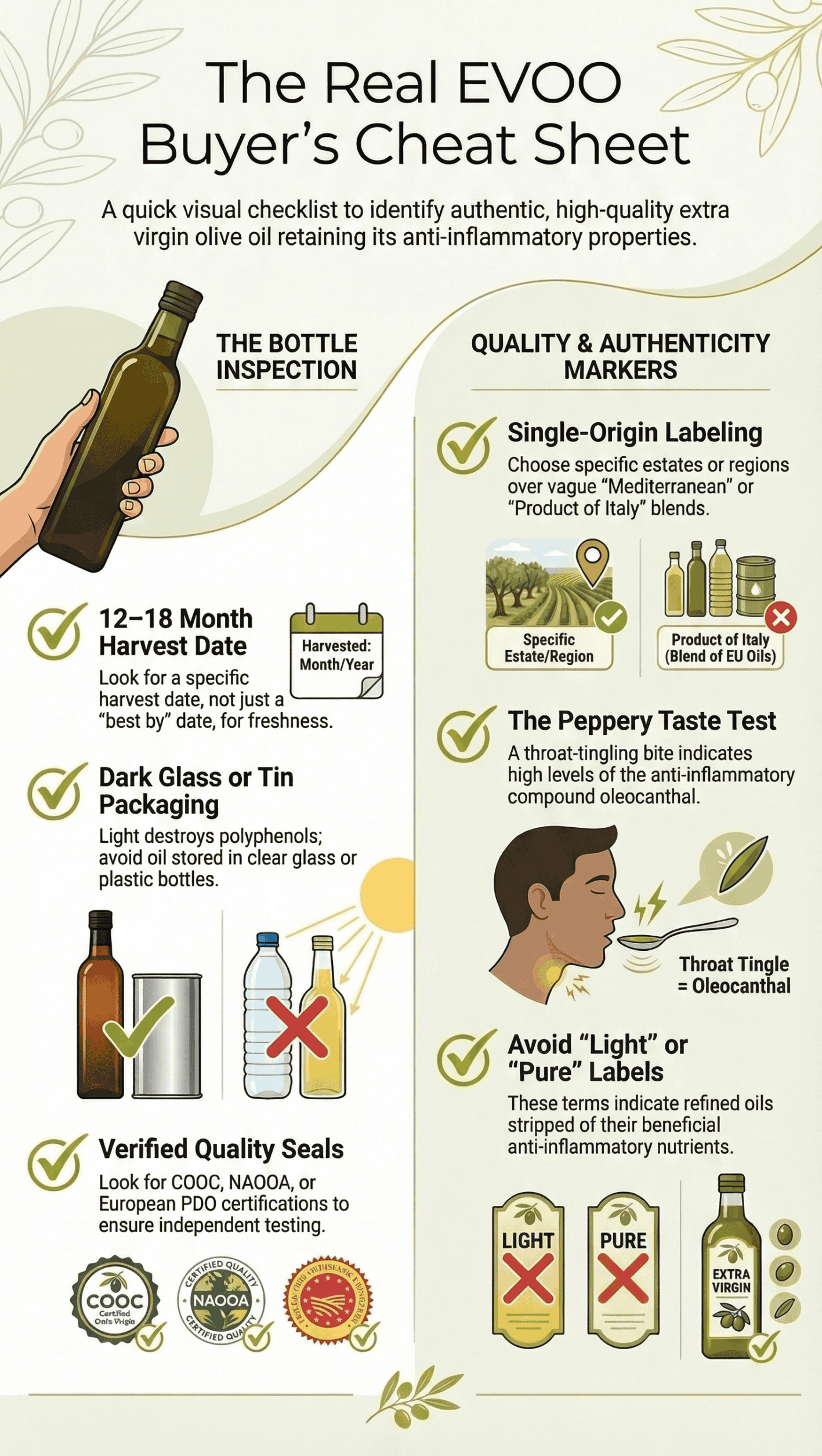
- A harvest date on the bottle (not just a “best by” date) — fresher oil means higher polyphenol content. Use it within 12–18 months of harvest
- Dark glass bottle or tin — clear glass lets light degrade the polyphenols
- A peppery, slightly bitter taste — that’s the polyphenols, and it’s the whole point
- My everyday pick: Lucini Premium Select Organic Extra Virgin Olive Oil — high polyphenols, consistently tested, widely available, and legitimately extra virgin
- I break down the best olive oil brands by use case below — cooking, drizzling, highest polyphenol, and more
This post may contain affiliate links to products that align with my evidence-based nutrition approach. As an Amazon Associate I earn from qualifying purchases. Full disclosure.
Most “Extra Virgin” Olive Oil Brands Fail their Own Standards
A 2010–2011 UC Davis Olive Center study tested the five top-selling imported EVOO brands in the United States — and found that 73% of the samples failed to meet international sensory standards for extra virgin
Let me say that again. Nearly three out of four bottles of the most popular “extra virgin” olive oils weren’t actually extra virgin. You’re paying a premium price for a premium product — and not getting it.
Before I get to the extra virgin
Best Extra Virgin Olive Oil Brands by Use Case
All of these are genuinely good olive oils. The difference is what you need them for. Pick the one that matches how you’ll actually use it — and if your budget allows, keep two bottles: one for cooking, one for finishing.
One thing worth noting: every brand I recommend below voluntarily participated in the NAOOA’s 2024 testing program, which was overseen by a Yale biostatistician and found no adulteration across the top 15 U.S. brands. These companies put their products up for independent scrutiny.
Best Organic EVOO/ Best All-Around: Lucini Premium Select
Lucini Premium Select Organic Extra Virgin Olive Oil is my personal everyday

Italian single-origin, organic, and independently verified. In third-party evaluations,
One thing to know: Because of the higher polyphenol content,
Best for: Your default oil for everything — cooking, drizzling, dressings. If you only buy one bottle, make it this one.
Best EVOO for Highest Polyphenol / Maximum Anti-Inflammatory Benefit: Life Extension EVOO
Life Extension California Estate Extra Virgin Olive Oil scored the highest polyphenol content of any approved brand in independent testing — 441 mg/kg using the standard Folin method, and 711 mg/kg using the more sensitive HPLC method. That’s not a marketing claim from the company. It’s third-party lab data.
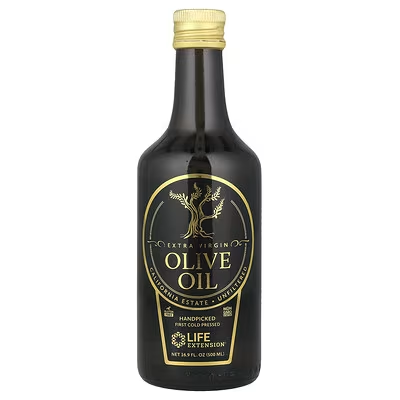
The taste was described as “out of balance” due to low fruitiness alongside high bitterness, which is a fancy way of saying: this one is all business. It’s intense. The throat burn is significant. If you’re not used to robust
Best for: Finishing drizzles, taking by the tablespoon, or anyone using
Best for Everyday Cooking: Cobram Estate
Cobram Estate Extra Virgin Olive Oil is one of the most awarded
Australia’s olive season is opposite to California’s, Italy’s, and Spain’s. So when those oils are halfway through their shelf life, Cobram’s are freshly pressed. Harvest dates on every bottle, dark glass, and their “Robust” variety is early-harvest with higher bitterness and pungency — which means more polyphenols.
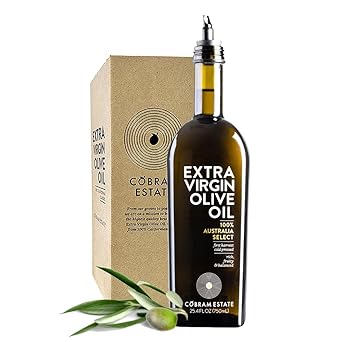
Best for: Anyone prioritizing maximum anti-inflammatory benefit from their
Best for Drizzling and Dressings: California Olive Ranch (100% California)
California Olive Ranch 100% California Extra Virgin Olive Oil is one of only four brands to pass both chemical and sensory evaluation in independent testing — with no defects. It tested at 182 mg/kg polyphenols and 77.9% oleic acid, with a mild sensory profile described as ripe banana and nutty with a hint of ripe apple.
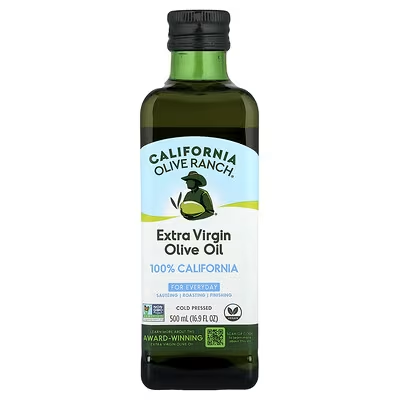
This is the approachable option — less peppery than
Important: They also sell a cheaper “Global Blend” that mixes California and imported oils. In independent testing, the Global Blend only rated “virgin” — not extra virgin — with a slight rancidity score. Skip that one. You want the bottle that says 100% California.
Best for: Finishing drizzles on salads, soups, roasted vegetables, grain bowls, and eggs. Also works beautifully whisked into dressings with lemon juice or balsamic vinegar. If you prefer a milder
Bonus Bundle (Affordability & Quality): Graza Sizzle + Drizzle
Graza did something smart: they made two separate oils for two separate purposes, and they sell them as a combo pack.

Graza Sizzle is their everyday cooking EVOO — made from mature, mid-season Picual olives from a single farm in Spain. Picual is one of the highest-polyphenol olive varieties. The flavor is mellower than early-harvest oils, which makes it incredibly versatile. The squeeze bottle is genuinely practical — you’ll use it more when it’s easy to grab, and the squeeze format minimizes oxygen exposure every time you use it.
Graza Drizzle is their early-harvest oil — bolder, more peppery, higher polyphenol content. Same squeeze bottle, same single-origin Picual olives, just harvested earlier when polyphenol concentration peaks.
Graza participated in the 2024 NAOOA testing program alongside the other brands I recommend. They weren’t included in the independent lab evaluation I reference throughout this post, so I don’t have third-party polyphenol numbers for them — but the NAOOA participation, single-origin sourcing, and Picual varietal are all strong signals.
Best for: If you want two oils covering every use case at a reasonable combined price. Sizzle for cooking, Drizzle for finishing. The squeeze bottles make both easy to use daily.
How to tell if your extra virgin olive oil is Good Quality
Harvest Date — The Single Most Important Thing on the Bottle
Olive oil is essentially a fresh-pressed fruit juice. It’s perishable. It degrades over time.
A harvest date tells you when the olives were actually picked. You want oil harvested within the last 12–18 months. A “best by” date is less useful because it doesn’t tell you when the olives were harvested — just when the manufacturer thinks the oil will still be passable. That’s a much lower bar. The NAOOA recently tightened their standards, limiting the “best if used by” date to 18 months from bottling — down from the previous standard of up to two years.
If there’s no harvest date on the bottle, the producer doesn’t want you to know how old it is. Every brand I recommend above prints one.
Dark Glass or Tin — Light Is the Enemy
Light is one of the biggest enemies of the compounds you’re paying for. Clear glass bottles under fluorescent grocery store lights are degrading the polyphenols while you shop. Think of it like storing a good red wine in a sunny window — the container matters.
Research has consistently shown that storing
Look for dark green or brown glass, or a tin. Graza’s squeeze bottle is another smart solution — it minimizes both light and oxygen exposure.
Single Origin — Know Where Your Olives Grew
Here’s one that trips a lot of people up: “Product of Italy” can mean the olives were grown in Spain, North Africa, or Greece, shipped to Italy, and bottled there. That label tells you where it was packaged — not where the olives grew.
Look for a specific region, estate, or producer. Single-origin oils tend to be fresher and more carefully handled. California-produced oils have shorter supply chains, meaning less time between harvest and your kitchen.
Two of the most widely sold imported EVOOs in the U.S. — Bertolli and Filippo Berio — are a case in point. A UC Davis Olive Center study found both were among the top-selling brands that failed to meet international sensory standards for extra virgin
The Throat Test — Your Built-In Quality Detector
This is my favorite tip, because your body already knows how to do this.
Take a small sip of the oil straight. If you feel a burn or slight cough at the back of your throat, that’s the polyphenols — specifically a compound called oleocanthal — doing their job. The pungency and bitterness you taste are directly tied to the concentration of polyphenols in the oil. The more it makes you want to clear your throat, the higher the concentration.
If your
And don’t go by color —
One important caveat: high polyphenols alone don’t guarantee quality. Gundry MD’s
Price as a Quality Signal
Quality EVOO costs at minimum $8–10 per liter to produce. If you’re seeing a 750ml bottle for $4.99, something doesn’t add up. In the NAOOA’s 2024 testing program — the largest of its kind in the U.S. — the only adulterated sample was selling for more than 50% below the average retail price of other EVOOs tested.
Independent lab data tells a similar story: the brands that passed both chemical and sensory testing cost $0.40–$0.81 per tablespoon, while many of the brands that failed were in the $0.12–$0.30 range. Cheap
Two more things to watch for while you’re scanning the shelf: “Light” or “pure”
Certifications Worth Looking For
Not all seals are created equal, but these indicate the oil has been independently evaluated:
NAOOA Certified Quality seal — the North American
COOC (California
Certified Extra Virgin (Applied Sensory Panel) seal — indicates the oil has been tasted by a certified panel, not just chemically tested.
USDA Quality Monitoring Program — voluntary program that verifies labeling accuracy and may include pesticide and heavy metal testing (though that testing is optional).
How to Use Extra Virgin Olive Oil for Anti-Inflammatory Benefits
You’ve got the right bottle. Now let’s talk about how to use it so you actually get the benefit.
Yes, You Can Cook with Extra Virgin Olive Oil
You’ve probably heard that you shouldn’t cook with
Smoke point does not predict how an oil performs when heated. Chemical stability does. And EVOO wins that comparison.
Use it for sautéing, roasting (up to 400°F), scrambled eggs, marinades — everything. The only scenario where you’d want a different option is sustained deep frying at 450°F+, which most of us aren’t doing regularly.
One practical tip for preserving polyphenols while cooking: temperature matters more than time. A study found that sautéing at moderate heat (248°F) for 30 minutes reduced polyphenols by about 40%, while high heat (338°F) reduced them by about 75% (8). When possible, add your EVOO in the later stages of cooking rather than at the beginning — especially after turning down the heat.
Use a Finishing Drizzle for Maximum Benefit
Here’s where the science gets interesting. The polyphenol that gives good
A randomized crossover trial in people with obesity and prediabetes found that replacing regular cooking fats with EVOO rich in oleocanthal and oleacein for one month improved inflammatory and antioxidant markers compared to common
For the highest anti-inflammatory benefit, drizzle raw EVOO over finished dishes — salads, soups, roasted vegetables, grain bowls, eggs. This is where a high-polyphenol EVOO like Life Extension or
How Much to Use Daily
Aim for 2–4 tablespoons a day. You don’t need to measure — just make EVOO your default fat for cooking, drizzling, dressings, and dipping. The Mediterranean diet trials that show reduced inflammatory markers and improved metabolic health all feature
The FDA allows olive oils with at least 70% oleic acid to carry this health claim: consuming about 1.5 tablespoons daily, when replacing saturated fats, may reduce heart disease risk. Every brand I recommend above exceeds that 70% threshold.
Replace, Don’t Add
Swap out vegetable oil, canola oil, or butter as your default — don’t add EVOO on top of everything else. The calorie load is the same as any fat (about 120 calories per tablespoon). The benefit comes from what it replaces, not what it adds.
Store It Right
Polyphenols degrade with light, heat, and oxygen. Keep your bottle in a cool, dark cabinet — not next to the stove, not on the counter, and not on top of the refrigerator where rising heat can quietly degrade the oil. Storage at room temperature results in only a slight increase in oxidized phenols over a year, while higher temperatures cause much greater increases. Once opened, use it within 2–3 months for maximum benefit.
Common Extra Virgin Olive Oil Myths — Debunked
🚩 “Put it in the freezer to test if it’s real.” This test is unreliable. UC Davis researchers refrigerated a variety of oils and found that after 2.5 days, none had solidified — including the extra virgin
🚩 “69% of imported
Extra Virgin Olive Oil and Inflammation: The Bigger Picture
Making EVOO your default cooking and finishing oil is one of the easiest high-impact swaps you can make. If you’ve been using whatever
Start with one bottle from the list above. Use it on everything. And pay attention to that bite in the back of your throat. It means something is actually working.
Olive oil isn’t a magic bullet. No single food is. But it’s the backbone of the Mediterranean diet for a reason, and when you zoom out, the research on high-quality EVOO and inflammation is genuinely strong.
For more on how individual foods impact inflammation, see my guides on turmeric for inflammation, the best fish for fighting inflammation, and the worst foods for joint inflammation. And for a broader look at the science behind anti-inflammatory eating, check out my article on the Dietary Inflammatory Index.
This content is for educational purposes only and is not a substitute for professional medical advice. For guidance on discussing nutrition changes with your healthcare provider, see my article on how to talk to your doctor about anti-inflammatory nutrition.
FAQ: Best Extra Virgin Olive Oil Brands, Quality, and Inflammation
How much
Is the polyphenol in
Is imported extra virgin
Does the freezer test work for checking
Does the color of
Can I cook with extra virgin
What about avocado oil as an alternative? Avocado oil is a fine cooking oil, but it doesn’t contain the same anti-inflammatory polyphenols as EVOO. If you’re choosing one default cooking fat for anti-inflammatory benefit, EVOO has stronger and more extensive research behind it. There’s room for both, but they’re not interchangeable from an inflammation standpoint.
What’s the difference between “extra virgin,” “virgin,” and “light”