The Worst Foods for Joint Inflammation (and What to Eat Instead)
A Registered Dietitian’s Guide to Dietary Triggers for Joint Pain
If your joints hurt — whether it’s stiffness in the morning, aching knees after sitting, or hands that just don’t cooperate anymore — you’ve probably wondered whether food has anything to do with it.
It does. And you’re not imagining the connection.
A 2025 systematic review and meta-analysis of randomized controlled trials found that dietary interventions significantly improved both pain and physical function in people with osteoarthritis. The effect size for pain reduction was meaningful — not subtle (European Journal of Clinical Nutrition, 2025). And separate research using the Dietary Inflammatory Index found that the more pro-inflammatory your overall eating pattern, the higher your risk of rheumatoid arthritis (Li et al., 2023).
So what you eat genuinely matters for your joints. This guide covers the foods most likely to increase joint inflammation — and, more importantly, what to reach for instead.
Short on Time? Do These Three Things First.
1. Cut back on ultra-processed foods and added sugars — these are the most consistent dietary drivers of inflammation across the research.
2. Add fatty fish (salmon, sardines) twice a week — omega-3s have the strongest evidence for reducing joint inflammation.
3. Build meals around vegetables,olive oil , nuts, and whole grains — the Mediterranean dietary pattern consistently reduces inflammatory markers.
Start with these. Then come back when you’re ready.
This post may contain affiliate links to products that align with my evidence-based nutrition approach. As an Amazon Associate I earn from qualifying purchases. Full disclosure.
Why Food Affects Your Joints in the First Place
Joint pain isn’t just a mechanical problem — it’s an inflammatory one. Whether you’re dealing with osteoarthritis, rheumatoid arthritis, or generalized joint stiffness, inflammation is a central driver of both the pain you feel and the damage happening inside the joint.
Think of your joints as having a thermostat for inflammation. When that thermostat is set too high — because of your diet, stress, sleep, or other factors — everything runs hotter. More swelling. More stiffness. More pain. What you eat either turns that thermostat up or helps bring it back down.
The Dietary Inflammatory Index, which I explain in detail in my article on what the DII actually measures, scores your overall eating pattern on a spectrum from anti-inflammatory to pro-inflammatory. Research consistently shows that people with more pro-inflammatory diets have higher levels of CRP and IL-6 — the same inflammatory markers that correlate with joint pain and disease progression.
The Foods Most Likely to Increase Joint Inflammation
Added Sugars and Refined Carbohydrates
This is the most consistent finding across the research. Diets high in added sugars and refined carbohydrates increase circulating inflammatory markers — particularly CRP and IL-6 — which directly affect joint inflammation.
The mechanism is straightforward: rapidly absorbed sugars trigger spikes in blood glucose and insulin, which activate inflammatory pathways including NF-κB, one of your body’s master inflammation switches. Over time, this creates a state of chronic low-grade inflammation that makes joint symptoms worse.
What this looks like in practice: sugary drinks, candy, pastries, white bread, and many packaged snack foods. But also watch for added sugars hiding in flavored yogurts, granola bars, sauces, and salad dressings. I covered advanced glycation end products — the damage that happens when sugar molecules attach to proteins — in my guide on AGEs and inflammation.
The swap: Whole fruits satisfy sweetness while delivering polyphenols and fiber that actually reduce inflammation. Berries, cherries, and pomegranates are especially well-studied for joint health.
Ultra-Processed Foods
Ultra-processed foods — think chips, frozen meals, fast food, packaged baked goods, hot dogs, and many shelf-stable snacks — are linked to higher inflammation independent of their individual ingredients. It’s not just the sugar or the fat; something about the processing itself (or the combination of additives, emulsifiers, and refined ingredients) appears to promote an inflammatory response.
A growing body of research connects ultra-processed food consumption to elevated CRP, metabolic inflammation, and increased risk of inflammatory conditions. For your joints, this matters because systemic inflammation doesn’t stay systemic — it concentrates in vulnerable tissues, and joints are among the most vulnerable.
The swap: Home-cooked meals using whole ingredients. It doesn’t need to be complicated. I have a full 7-day anti-inflammatory meal plan that can get you started.
Refined Seed Oils High in Omega-6 Fatty Acids
This one needs some nuance. Omega-6 fatty acids aren’t inherently bad — your body needs them. But the modern Western diet delivers far more omega-6s than omega-3s, often at a ratio of 15:1 or higher, when the ideal is closer to 4:1 or lower.
The issue is that certain omega-6 fatty acids (particularly arachidonic acid) serve as building blocks for pro-inflammatory molecules called prostaglandins and leukotrienes. When your omega-6 to omega-3 ratio is chronically skewed, your body produces more of these inflammatory compounds — and your joints feel it.
The biggest sources of excess omega-6 in the American diet are soybean oil, corn oil, sunflower oil, and safflower oil — which show up in almost every restaurant meal and processed food.
The swap: Extra virgin
Excess Alcohol
Moderate alcohol consumption has a complicated relationship with inflammation — some research suggests very small amounts of red wine may have anti-inflammatory properties from polyphenols. But for joint health specifically, the evidence leans negative.
Alcohol increases intestinal permeability (sometimes called “leaky gut”), which allows bacterial compounds to enter the bloodstream and trigger systemic inflammation. It also impairs liver detoxification and disrupts gut bacteria — both of which feed the inflammatory cycle. For people with gout, alcohol is a well-established trigger that increases uric acid levels. For those with rheumatoid arthritis, heavy drinking is associated with worse disease outcomes.
The practical approach: If you drink, keep it minimal — no more than one drink a day for women, and consider alcohol-free days to give your body recovery time.
Processed and Red Meat in Excess
This is another area where nuance matters. Red meat isn’t a toxin. But high intakes of processed meats (bacon, sausage, deli meats, hot dogs) and frequent consumption of red meat are consistently associated with higher inflammatory markers.
Processed meats contain compounds like advanced glycation end products (AGEs), nitrates, and excess sodium that promote inflammation. High-heat cooking methods — grilling, frying, charring — produce additional inflammatory compounds.
The swap: Fish twice a week (especially salmon, sardines, or mackerel for omega-3s), plus plant-based protein sources like lentils, chickpeas, and edamame. When you do eat red meat, choose grass-finished cuts and cook at lower temperatures.
What to Eat Instead: Foods That Calm Joint Inflammation
Here’s the good news — the research on anti-inflammatory foods for joints is just as strong as the evidence on inflammatory ones. A 2021 meta-analysis of randomized controlled trials found that anti-inflammatory diets — including Mediterranean, vegetarian, and vegan patterns — significantly reduced pain on a visual analog scale in people with rheumatoid arthritis (Forsyth et al., 2021).
| Anti-Inflammatory Food | Key Compounds | What It Does for Joints |
|---|---|---|
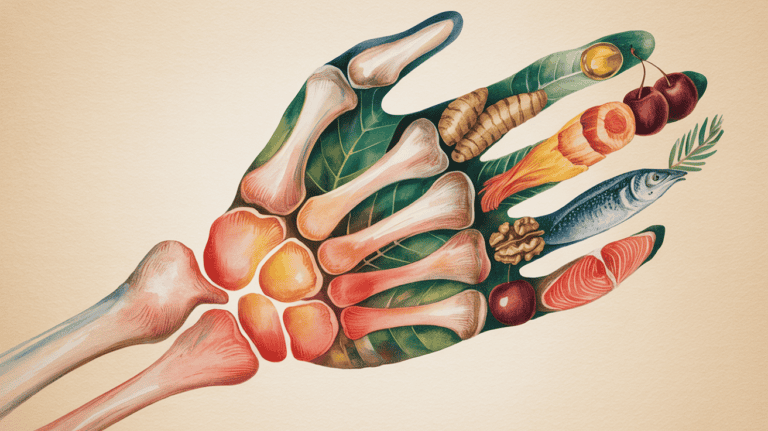
| Fatty fish (salmon, sardines, mackerel) | EPA and DHA omega-3s | Reduce inflammatory prostaglandins; improve joint stiffness |
| Extra virgin | Oleocanthal, polyphenols | Inhibits COX enzymes (same pathway as ibuprofen) |
| Berries (blueberries, cherries, strawberries) | Anthocyanins | Lower CRP and IL-6; tart cherries studied for gout specifically |
| Leafy greens (spinach, kale, broccoli) | Vitamin K, sulforaphane | Reduce inflammatory markers in blood |
| Walnuts | ALA omega-3s, polyphenols | Associated with lower inflammatory disease mortality |
| Turmeric (with black pepper) | Curcumin | Modulates NF-κB pathway; studied in RA and OA |
| Ginger | Gingerols | Anti-inflammatory effects similar to curcumin |
| Beans and lentils | Fiber, polyphenols | Support gut health, which influences systemic inflammation |
For a deeper look at omega-3-rich fish options, see my guide to the best fish for inflammation. And I cover turmeric dosing and absorption strategies in my article on how to use turmeric for inflammation.
A Week of Joint-Friendly Eating
You don’t need a special “joint diet.” You need an overall anti-inflammatory eating pattern. Here’s what a day might look like:
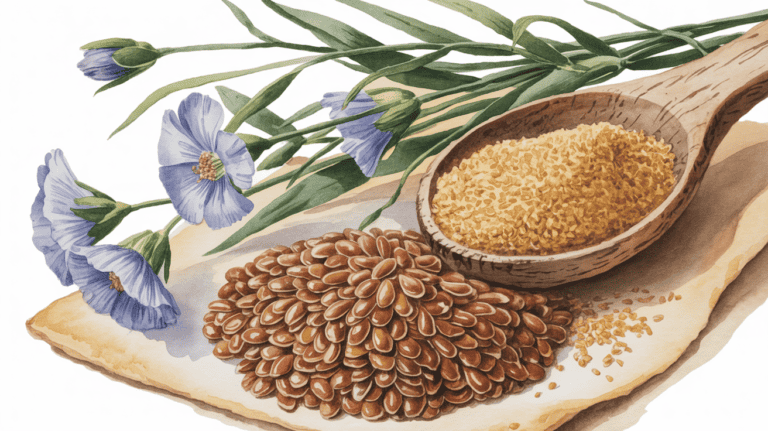
Breakfast: Oatmeal topped with walnuts, blueberries, and ground flaxseed. Coffee or green tea.
Lunch: Big salad with mixed greens, chickpeas, cherry tomatoes, cucumber, avocado, and extra virgin
Snack: Apple slices with almond butter. A handful of cherries.
Dinner: Baked salmon with roasted broccoli and sweet potato. Turmeric-ginger tea.
Nothing extreme. Nothing restrictive. Just foods that happen to calm inflammation rather than drive it. I have a full week of meals mapped out in my 7-day anti-inflammatory meal plan.
Common Questions: Nightshades, Gluten, and Dairy
You’ll find plenty of advice online telling you to eliminate nightshades (tomatoes, peppers, eggplant, potatoes), gluten, or dairy for joint pain. Here’s what the evidence actually says.
Nightshades: There’s very little scientific evidence that nightshade vegetables worsen joint inflammation in most people. The concern centers on solanine, a compound found in nightshades, but the amounts in food are extremely small. Some individuals do report sensitivity, and if you notice a consistent pattern — more stiffness after eating tomatoes, for example — it’s worth a short elimination trial. But blanket avoidance of nightshades means losing some genuinely anti-inflammatory foods (tomatoes are high in lycopene, peppers are loaded with vitamin C).
Gluten: Unless you have celiac disease or a confirmed non-celiac gluten sensitivity, removing gluten isn’t likely to help your joints. That said, some people with autoimmune forms of arthritis report improvement after reducing gluten. If you want to test this, try a strict 4-week elimination and track your symptoms carefully. Many women find that the benefit they attribute to removing gluten actually comes from eating fewer processed foods overall.
Dairy: The evidence here is genuinely mixed. Some studies suggest dairy may be mildly pro-inflammatory; others find it’s neutral or even anti-inflammatory (particularly fermented dairy like yogurt and kefir). If you suspect dairy is a trigger, try removing it for 3-4 weeks and reintroducing it systematically. But don’t assume you need to give up yogurt — it delivers probiotics that support the gut health that influences joint inflammation.
The bottom line on elimination approaches: they can be useful tools for identifying individual triggers, but they shouldn’t be your starting point. Start with the additions (more fish, more vegetables, more
The Gut-Joint Connection
This is the part most articles about joint food miss entirely: your gut health directly influences your joint inflammation.
Your intestinal lining acts as a barrier between your digestive system and your bloodstream. When that barrier becomes compromised — through poor diet, chronic stress, alcohol, or certain medications — bacterial compounds can leak into your bloodstream and trigger systemic inflammation. Researchers call this intestinal permeability (sometimes called “leaky gut”), and it’s increasingly recognized as a contributor to inflammatory joint disease.
A 2024 randomized trial (the FEAST study protocol) specifically notes that chronic inflammation plays a key role in osteoarthritis pathophysiology, and that dietary interventions targeting inflammation — not just weight — may be a better approach (Law et al., 2024).
Supporting your gut means eating more fiber from vegetables and whole grains, including fermented foods like yogurt and kimchi, and reducing the processed foods and artificial sweeteners that disrupt gut bacteria. I cover gut health in detail in my article on the gut-brain connection and microbiome.
The FEAST Trial: What’s Coming Next
It’s worth knowing that researchers at La Trobe University in Australia are running a randomized controlled trial called FEAST (Effect of an Anti-inflammatory Diet for Knee Osteoarthritis) that directly compares an anti-inflammatory dietary program to a standard low-fat diet for knee OA pain (Law et al., 2024). This kind of head-to-head comparison is exactly what the field needs, and results should help clarify just how much an anti-inflammatory diet can do for joint pain beyond general healthy eating.
Supplements Worth Considering for Joint Inflammation
Beyond food, a few supplements have research support for joint inflammation:
Omega-3 fish oil: A 2025 meta-analysis found that omega-3 supplementation produces clinically meaningful pain reduction, particularly in inflammatory conditions like rheumatoid arthritis and migraine. The analgesic effect was dose-dependent, with benefits plateauing around 2–3 grams of EPA+DHA daily (PMC, 2025).
I recommend: Nordic Naturals Ultimate Omega (good), Carlson The Very Finest Fish Oil (better), or Viva Naturals Triple Strength Omega-3 (best for higher EPA+DHA per capsule).
Curcumin with piperine: The anti-inflammatory compound in turmeric, taken with black pepper extract for absorption. I cover this in detail in my turmeric for inflammation guide.
Vitamin D: If you’re deficient, correcting your levels may help reduce inflammatory markers — especially in autoimmune joint conditions. See my full breakdown in my article on vitamin D and inflammation.
You Have More Influence Than You Think
You’re not crazy for wondering if food matters here. It does. The research is clear: what you eat either feeds joint inflammation or helps calm it down. And you don’t have to be perfect — you just have to shift the balance.
The most impactful changes are often the simplest: less sugar and processed food, more fish and
You deserve to know that this option exists — that your grocery cart is a legitimate tool in managing joint pain. Not a replacement for medical care, but a powerful complement to it.
What’s the one thing you’ll try this week?
This post is for informational purposes only and is not a substitute for professional medical advice. Joint pain can have many causes, and persistent or worsening symptoms should be evaluated by your healthcare provider. For guidance on having that conversation, see my article on how to talk to your doctor about anti-inflammatory nutrition.