How to Talk to Your Doctor About Anti-Inflammatory Nutrition for Menopause
Conversation Scripts, Research to Bring, and What to Do If You’re Dismissed
If you’ve ever left a medical appointment feeling rushed, minimized, or told that your symptoms are “just part of getting older” — this article is for you.
The conversation between a perimenopausal woman and her healthcare provider about nutrition can be one of the most frustrating interactions in modern medicine. Not because doctors don’t care — most do — but because of a systemic gap between what nutrition research shows and what most physicians are trained to discuss.
Here’s how to bridge that gap, advocate for yourself effectively, and build a collaborative relationship with your healthcare team.
Short on Time? Remember This One Sentence.
“I want to use nutrition as a complement to whatever you recommend — not instead of it.”
This disarms defensiveness, positions you as collaborative, and opens the conversation. Bring the research summary below, bring your specific dietary changes, and request the lab work listed in this article. That’s your appointment toolkit.
This post may contain affiliate links to products that align with my evidence-based nutrition approach. As an Amazon Associate I earn from qualifying purchases. Full disclosure.
Why the Conversation Is Difficult (It’s Not You)
The average U.S. medical school provides approximately nineteen hours of nutrition education across four years of training. Some provide less. Physicians are trained extensively in pharmacology, pathophysiology, and surgical intervention. Nutrition — particularly the relationship between dietary patterns and inflammatory conditions — gets a fraction of that attention.
This means when you bring up the relationship between an anti-inflammatory diet and menopausal symptoms, your doctor may genuinely not have been exposed to the evidence. Their response — “there’s no evidence for that” or “just eat a balanced diet” — may reflect their training gap, not the actual state of the research.
Understanding this context doesn’t make it less frustrating. But it changes your strategy. Instead of expecting your doctor to lead the nutrition conversation, come prepared to lead it yourself — collaboratively.
What to Bring to Your Appointment
1. A Research Summary
Bring a one-page printout of the key studies supporting your approach. Here’s what to include:
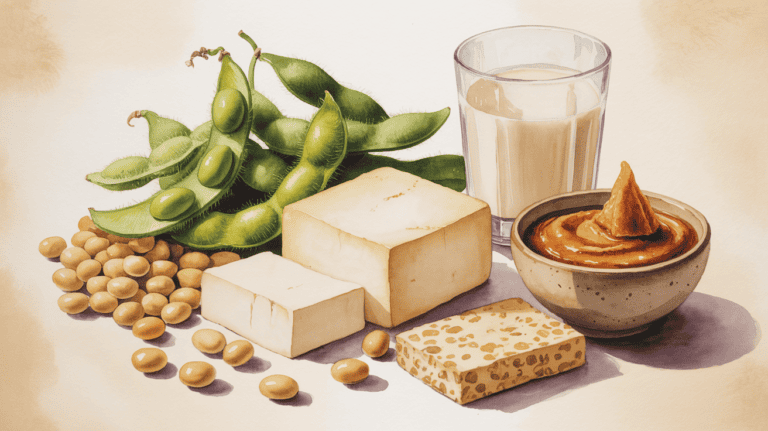
- Barnard et al. (2023). WAVS trial: plant-based diet with soybeans reduced moderate-to-severe hot flashes by 88% in 12 weeks. Menopause, 30(1), 80-87.
- Blanco Mejia et al. (2024). 40 RCTs: soy isoflavones show no estrogenic effects across four biological markers. Advances in Nutrition, 15(12), 100306.
- McCarthy & Raval (2020). Perimenopause described as a systemic inflammatory phase. Journal of Neuroinflammation, 17, 317.
- El Khoudary et al. (2025). SWAN study: inflammatory biomarkers rise around the final menstrual period — sometimes years before diagnosis. J Clin Endocrinol Metab.
- Sonnenburg et al. (2021). Stanford trial: fermented food diet increased microbial diversity, decreased IL-6. Cell, 184(16), 4137-4153.
An important note on NAMS: The 2023 North American Menopause Society position statement classifies soy as “not recommended” as a standalone treatment for hot flashes (NAMS, 2023). If your doctor cites this, you can acknowledge it while noting that the WAVS trial used whole soy within a comprehensive dietary pattern — not isolated soy supplements — and produced substantially better results than the supplement trials NAMS evaluated. The distinction matters. (I explain this fully in my article on equol and why soy works for some women but not others.)
Handing your doctor peer-reviewed citations from Menopause, Cell, and the Journal of Neuroinflammation changes the dynamic of the conversation. This isn’t a blog printout. These are the journals your doctor’s colleagues publish in.
2. A Summary of Your Specific Dietary Changes
Be specific. Instead of “I’m eating anti-inflammatory foods,” say:
“I’m following an anti-inflammatory dietary pattern that includes daily soy foods, two tablespoons of ground flaxseed, fermented foods like kefir and kimchi, extra virgin
This demonstrates you’re doing something structured, evidence-based, and trackable — not following a trend.
3. Specific Lab Requests
- High-sensitivity CRP (inflammatory baseline)
- Fasting insulin (metabolic screening)
- 25-hydroxy vitamin D
- Full thyroid panel (TSH, Free T4, Free T3, TPO antibodies)
- Ferritin
- HbA1c
These are standard labs your doctor can order. CRP and fasting insulin are the most important for tracking your inflammatory and metabolic progress alongside dietary changes.
Conversation Scripts
Opening the Conversation
“I’ve been researching the relationship between inflammation and menopausal symptoms, and I’ve started an anti-inflammatory dietary approach based on published clinical trials. I’d like to share what I’m doing and get your input.”
Requesting Lab Work
“I’d like to add high-sensitivity CRP and fasting insulin to my next bloodwork. I’m tracking my inflammatory and metabolic markers alongside my dietary changes.”
If Your Doctor Is Skeptical
“I understand this may not be standard practice yet. I’ve brought a summary of the published research — all from peer-reviewed journals. Would you be open to reviewing it?”
If Your Doctor Is Supportive
“Thank you — I really appreciate your openness. Could we schedule a follow-up in three months to compare my lab values and symptom trends?”
If Your Doctor Is Dismissive
“I appreciate your time. I’ll continue with the dietary approach — the published evidence supports it. I may also seek an additional opinion from a provider who integrates nutritional approaches. Would you be willing to include my requested lab tests regardless?”
You have every right to request lab work and to be treated as a knowledgeable participant in your own care.
If You Need a New Provider
If your current provider is consistently dismissive of evidence-based nutritional approaches, consider:
- Integrative medicine physicians — MDs who incorporate nutrition and lifestyle alongside conventional care
- Registered Dietitians — the most qualified professionals for nutrition-specific guidance, many offering telehealth
- The Menopause Society provider directory — clinicians with menopause-specific certification
- Functional medicine practitioners (IFMCP certified) — often more nutrition-literate
You can work with multiple providers. Your primary physician manages medical care. An RD manages nutrition. A therapist supports mental health. This is collaborative care — and it’s the model that serves perimenopausal women best.
What to Do After the Appointment
Regardless of how the conversation goes:
- Document your dietary approach and start date for your own records
- Get baseline labs — even if you have to request them firmly
- Track your symptoms consistently (frequency, severity, triggers)
- Retest labs at three months — this is where the data becomes compelling
- Bring your results to the follow-up — “My CRP dropped from 2.4 to 0.8” is a conversation-changing data point
You Deserve to Be Heard
The medical system wasn’t designed for the kind of care perimenopausal women need. It was designed for acute problems with clear diagnoses and pharmaceutical solutions. The slow, systemic, multi-symptom, inflammation-driven experience of perimenopause doesn’t fit neatly into a ten-minute appointment.
That doesn’t mean you should accept dismissal. It means you need to come prepared, advocate clearly, and — when necessary — find providers who will meet you where you are.
You are not difficult for asking questions. You are not “doing too much research.” You are an informed participant in your own health — and that is exactly what you should be.
This article is for educational purposes. It is not medical or legal advice regarding patient-provider relationships. For a full overview of the anti-inflammatory approach these conversations are about, start with my pillar article on hot flashes, inflammation, and what to put in your grocery cart.
References (click to expand)
Barnard, N. D., et al. (2023). A dietary intervention for vasomotor symptoms of menopause: A randomized, controlled trial. *Menopause*, 30(1), 80-87. [https://doi.org/10.1097/GME.0000000000002080](https://doi.org/10.1097/GME.0000000000002080)
Blanco Mejia, S., et al. (2024). Effect of soy isoflavones on measures of estrogenicity. *Advances in Nutrition*, 15(12), 100306. [https://doi.org/10.1016/j.advnut.2024.100306](https://doi.org/10.1016/j.advnut.2024.100306)
El Khoudary, S. R., et al. (2025). Inflammatory biomarkers across the menopause transition: SWAN study. *Journal of Clinical Endocrinology & Metabolism*. [https://doi.org/10.1210/clinem/dgaf175](https://doi.org/10.1210/clinem/dgaf175)
McCarthy, M., & Raval, A. P. (2020). The peri-menopause in a woman’s life: A systemic inflammatory phase. *Journal of Neuroinflammation*, 17, 317. [https://doi.org/10.1186/s12974-020-01998-9](https://doi.org/10.1186/s12974-020-01998-9)
North American Menopause Society (NAMS). (2023). The 2023 nonhormone therapy position statement. *Menopause*, 30(6), 573-590. [https://doi.org/10.1097/GME.0000000000002200](https://doi.org/10.1097/GME.0000000000002200)
Sonnenburg, J. L., et al. (2021). Gut-microbiota-targeted diets modulate human immune status. *Cell*, 184(16), 4137-4153. [https://doi.org/10.1016/j.cell.2021.06.019](https://doi.org/10.1016/j.cell.2021.06.019)