What Is the Dietary Inflammatory Index — and Why Does It Matter During Menopause?
A Research Tool That Predicts Menopausal Symptom Severity — and How to Use It to Improve Yours
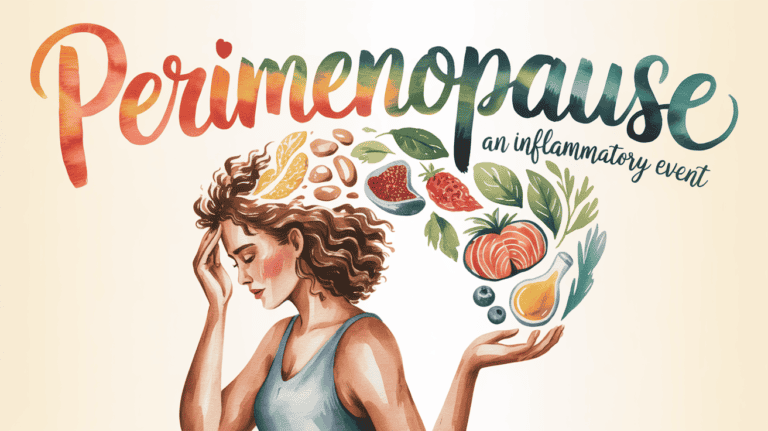
There is a tool that researchers use to measure how inflammatory — or anti-inflammatory — your overall diet is. It’s called the Dietary Inflammatory Index, or DII. And a 2023 study found that it can predict how severe your menopausal symptoms are.
This isn’t a fad metric. The DII was developed from a systematic review of over 1,900 peer-reviewed articles examining the relationship between what you eat and your inflammatory biomarkers. It’s been validated across dozens of studies and multiple populations.
Understanding the DII won’t ask you to count calories, eliminate food groups, or follow a restrictive plan. What it will do is give you a research-backed framework for understanding which parts of your current diet are promoting inflammation — and which parts are calming it.
Short on Time? Here’s the Takeaway.
- The DII scores your overall diet on a spectrum from pro-inflammatory (positive score) to anti-inflammatory (negative score).
- A 2023 study found that a more pro-inflammatory diet predicts worse menopausal symptoms — including hot flashes, physical symptoms, and mood changes.
- You shift your score through addition, not restriction. The highest-impact additions: extra virgin
olive oil , omega-3s, daily fermented foods, diverse plants, berries, green tea, and turmeric.- These are the same foods in the anti-inflammatory pattern I recommend throughout this site. The DII is simply the research framework that explains why that pattern works.
This post may contain affiliate links to products that align with my evidence-based nutrition approach. As an Amazon Associate I earn from qualifying purchases. Full disclosure.
What the Dietary Inflammatory Index Actually Is
The DII was developed by Shivappa and colleagues in 2014. They systematically reviewed the literature on 45 different dietary parameters — nutrients, foods, and food components — and scored each one based on whether research showed it was predominantly pro-inflammatory, anti-inflammatory, or neutral (Shivappa et al., 2014).
They measured impact against six inflammatory biomarkers: IL-1β, IL-4, IL-6, IL-10, TNF-α, and C-reactive protein (CRP) — the same markers that rise during perimenopause.
The result is a composite score. A more negative score = more anti-inflammatory diet. A more positive score = more pro-inflammatory diet.
It’s not a perfect measure — no single index captures the full complexity of how food affects inflammation. But it’s the most rigorously validated tool we have for quantifying the inflammatory potential of what’s on your plate.
Why This Matters During Menopause
In 2023, Haghshenas and colleagues examined the relationship between DII scores and menopause-specific quality of life. The finding: a more pro-inflammatory diet was significantly associated with worse symptom severity — including vasomotor symptoms, physical symptoms, and psychosocial symptoms (Haghshenas et al., 2023).
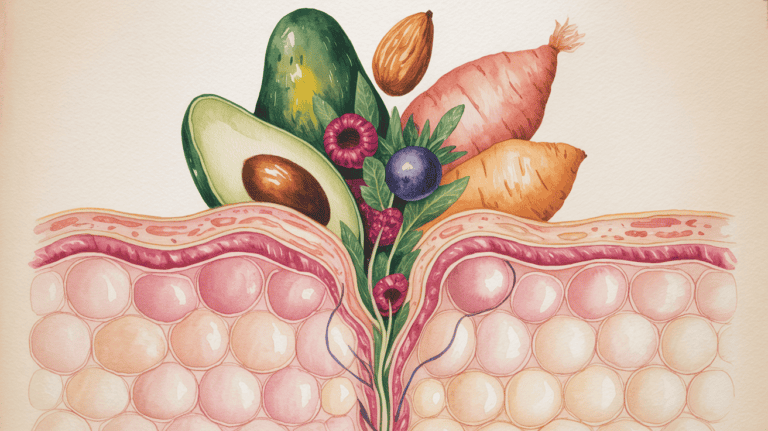
This validates what the broader research points toward: perimenopause is a systemic inflammatory transition. When your diet adds to that inflammatory load, symptoms worsen. When your diet counters it, symptoms improve.
The DII gives us a way to measure where your diet falls on that spectrum.
What Promotes Inflammation (According to the DII)
Strongly pro-inflammatory:
– Saturated fat — high amounts in fatty red meat, butter, processed foods. Activates inflammatory pathways through toll-like receptors.
– Trans fat — still present in some processed foods. Among the most consistently pro-inflammatory dietary components.
– Added sugar and refined carbohydrates — spike insulin and blood glucose, promoting inflammatory cytokine production. Sugary beverages are a major contributor.
– Excess omega-6 fatty acids — from vegetable oils, processed snacks, fried foods. Pro-inflammatory when not balanced by omega-3 intake.
Moderately pro-inflammatory:
– Alcohol (in excess)
– Highly processed foods as a category — these combine multiple pro-inflammatory factors: refined carbs, sugar, omega-6 oils, additives
What Reduces Inflammation (According to the DII)
Strongly anti-inflammatory:
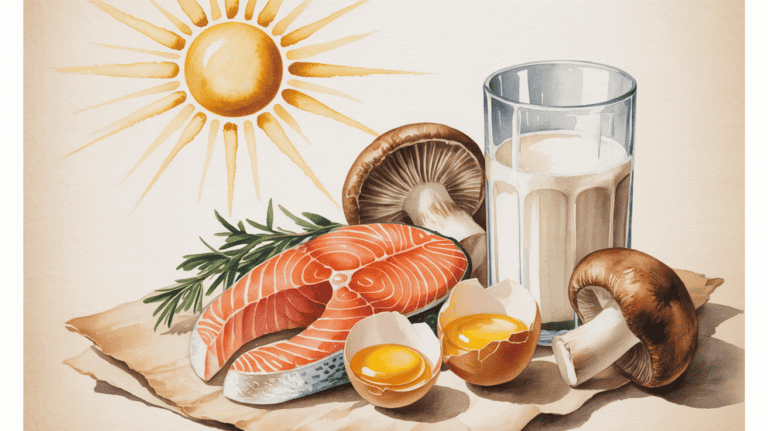
– Omega-3 fatty acids — from fish (EPA/DHA) and flaxseed (ALA). Among the most consistently anti-inflammatory dietary components.
– Fiber — especially soluble and fermentable fiber from fruits, vegetables, legumes, whole grains. Feeds anti-inflammatory gut bacteria.
– Flavonoids and polyphenols — from berries, green tea, extra virgin olive oil, tart cherries, turmeric, and deeply pigmented produce.
– Vitamin D — anti-inflammatory across multiple studies. Most people are deficient.
– Magnesium — involved in hundreds of enzymatic reactions with documented anti-inflammatory effects.
Moderately anti-inflammatory:
– Vitamins C, E, A, and beta-carotene (from produce)
– Zinc and selenium
– Garlic, ginger, onions
– Green and black tea
– Turmeric (curcumin)
A Simplified Self-Assessment
The full DII calculation requires detailed dietary analysis software. That’s not practical for most people. But you can estimate where you fall by honestly answering these questions about your typical eating pattern over the past month:
Pro-inflammatory inputs — how often?
– Sugar-sweetened beverages per week?
– Deep-fried foods per week?
– Processed meats (bacon, deli meats, hot dogs)?
– Highly processed snacks (chips, crackers, cookies)?
– Primary cooking oil — vegetable/canola oil or EVOO?
– Alcoholic drinks per week?
Anti-inflammatory inputs — how often?
– Fatty fish (salmon, sardines, mackerel) per week?
– Berries or deeply colored fruits per week?
– Leafy greens per week?
– Fermented foods daily?
– Extra virgin
– How many different plant foods per week?
– Green tea regularly?
– Turmeric, ginger, garlic in cooking?
– Ground flaxseed or walnuts?
– Soy foods (edamame, tofu, tempeh, miso)?
If your pro-inflammatory inputs significantly outweigh your anti-inflammatory ones, your DII score is likely positive. If the reverse is true, you’re likely in anti-inflammatory territory.
How to Shift Your Score: Addition, Not Elimination
This is the core principle of my approach: nutrition by addition. Instead of focusing on what to eliminate — which creates anxiety, deprivation, and unsustainable restriction — focus on what to add. The additions naturally displace inflammatory inputs over time.
The highest-impact additions based on DII research:
- Extra virgin olive oil as your primary fat — replaces omega-6-heavy cooking oils
- Daily omega-3 source — fatty fish twice weekly plus daily ground flaxseed
- Daily fermented food — kefir, sauerkraut, kimchi, or miso
- Daily berries or deeply pigmented fruit — anthocyanins are among the most potent anti-inflammatory food compounds
- Diverse plant foods — aim for 30+ different plants per week
- Green tea — EGCG with every cup
- Turmeric and ginger — in cooking, blends, or warm beverages
- Daily soy food — isoflavones plus protein plus fiber
These overlap entirely with the anti-inflammatory grocery list in my hot flash article. The DII provides the research framework explaining why that pattern works. And if you want to see what this looks like on actual plates, I have a 7-day meal plan built around exactly these principles.
If five additions feels like too many to start, try the 5 simplest anti-inflammatory swaps — one per week, no overhaul required.
The DII and the Bigger Picture
The DII research confirms what the WAVS trial, the Stanford fermented food study, the Mediterranean diet literature, and the perimenopause inflammation research all point toward: the inflammatory quality of your overall dietary pattern is a measurable, modifiable factor in how you experience the menopausal transition.
You don’t need to calculate your exact DII score. You need to understand the principle: every food you eat pushes your inflammatory balance in one direction or the other. Small, consistent shifts accumulate into a meaningfully different inflammatory environment over weeks and months.
The DII isn’t just an academic exercise. It’s validation that the approach works — and a framework for understanding why.
This article is for educational purposes and is not a substitute for personalized nutrition counseling or medical advice. If you’re unsure how to start shifting your dietary pattern, my 5 swaps article is designed for exactly that moment. (And if you want help talking to your doctor about these changes, start here.)
References (click to expand)
Haghshenas, N., Baharanchi, F. H., Melekoglu, E., Sohouli, M. H., & Shidfar, F. (2023). Comparison of predictive effect of the dietary inflammatory index and empirically derived food-based dietary inflammatory index on the menopause-specific quality of life and its complications. *BMC Women’s Health*, 23(1), 349. [https://doi.org/10.1186/s12905-023-02485-y](https://doi.org/10.1186/s12905-023-02485-y)
Shivappa, N., Steck, S. E., Hurley, T. G., Hussey, J. R., & Hébert, J. R. (2014). Designing and developing a literature-derived, population-based dietary inflammatory index. *Public Health Nutrition*, 17(8), 1689-1696. [https://doi.org/10.1017/S1368980014000469](https://doi.org/10.1017/S1368980014000469)