The Most Common Nutrient Deficiencies in Women Over 40 (and How They Fuel Inflammation)
A Registered Dietitian’s Evidence-Based Guide to the Nutrients You May Be Missing
Here’s something that doesn’t get talked about enough: you can eat three meals a day, make reasonably healthy choices, and still be deficient in nutrients that your body urgently needs — especially after 40.
It’s not a failure of effort. It’s a combination of factors that converge in midlife: hormonal shifts change how your body absorbs and uses nutrients, gut health evolves, stress depletes certain vitamins faster than you can replace them, and the nutrient density of typical modern diets often falls short of what your body actually requires during this transition.
A 2024 systematic review found that postmenopausal women are at substantially elevated risk of inadequate intake or absorption of several key nutrients — with deficiencies in vitamin D, magnesium, iron, B vitamins, and omega-3 fatty acids being the most common and consequential (Wylenzek et al., 2024).
And here’s the part that connects everything: many of these deficiencies don’t just cause isolated symptoms. They fuel inflammation — the same low-grade, chronic inflammation that drives so many of the conditions women in midlife are dealing with.
Short on Time? Do These Three Things First.
1. Ask your doctor to check your vitamin D level at your next appointment — deficiency is extremely common and easy to correct
2. Add magnesium-rich foods daily: dark leafy greens, pumpkin seeds, almonds, or dark chocolate
3. Include a B-vitamin-rich protein source at each meal: eggs, fish, poultry, legumes, or fortified foods
Start with these. Then come back when you’re ready.
This post may contain affiliate links to products that align with my evidence-based nutrition approach. As an Amazon Associate I earn from qualifying purchases. Full disclosure.
Why Deficiencies Get Worse After 40
Before we get into specific nutrients, it helps to understand why this happens in midlife specifically. Several factors converge at once.
Declining estrogen affects absorption. Estrogen plays a role in calcium uptake, vitamin D metabolism, and maintaining the gut lining that allows nutrients to be absorbed efficiently. As estrogen declines during perimenopause, your ability to absorb and utilize certain nutrients decreases — even if your diet hasn’t changed. A 2024 review in Nutrients noted that this is particularly pronounced for calcium, vitamin D, and magnesium (Erdélyi et al., 2024).
Gut changes reduce nutrient uptake. Your gut microbiome shifts during menopause, and with it, the efficiency of your digestive system. Reduced microbial diversity can affect how well you break down and absorb nutrients from food. As I explore in my guide on the gut-brain connection, these changes have far-reaching effects beyond digestion.
Medication use increases. Many women in midlife begin taking medications — proton pump inhibitors for reflux, metformin for blood sugar, statins for cholesterol — that can deplete specific nutrients, including B12, magnesium, and CoQ10.
Caloric intake often decreases as metabolism slows, but nutrient needs stay the same or increase. You need fewer calories but more nutrition per calorie — a narrower target that’s hard to hit consistently.
The result: many women are overfed but undernourished. Getting plenty of food, but not enough of what their bodies actually need.
Vitamin D: The Most Common Deficiency — and the Most Underestimated
Vitamin D deficiency is remarkably widespread. Some estimates suggest that over 40% of adults in the U.S. are deficient, with higher rates in women, people with darker skin, and those who live in northern latitudes.
But vitamin D isn’t just about bones (though it’s critical there — it directly regulates calcium absorption, and without adequate D, your fracture risk increases significantly). Vitamin D is also a powerful immune modulator and anti-inflammatory agent. It influences over 200 genes, including those involved in inflammatory signaling.
A 2025 review on menopause nutrition identified vitamin D deficiency as “ubiquitous” in this population, arising from limited sun exposure, insufficient dietary sources, and impaired kidney conversion of vitamin D to its active form (Frontiers in Nutrition, 2025). The review explicitly connected low vitamin D to increased inflammation, insulin resistance, cardiovascular risk, depression, and cognitive decline in menopausal women.
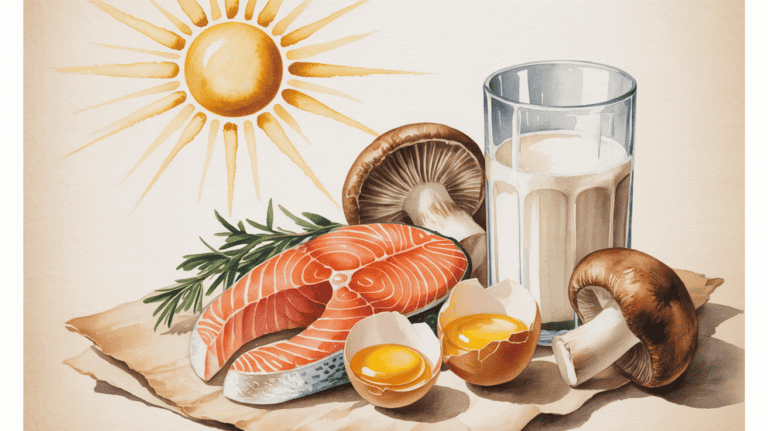
What to do: Ask your doctor to check your 25-hydroxyvitamin D level. Optimal is generally 40–60 ng/mL — higher than the “adequate” cutoff of 30 that many labs use. Food sources are limited: fatty fish, egg yolks, and fortified dairy or plant milks provide some, but most women in midlife benefit from supplementation. A daily vitamin D3 supplement of 1,000–2,000 IU is a reasonable starting point, though your doctor may recommend more based on your levels. NatureWise Vitamin D3 is a well-reviewed, affordable option.
I discuss vitamin D’s role in the broader anti-inflammatory picture in my article on perimenopause as an inflammatory event.
Magnesium: The Quiet Crisis
Magnesium is involved in over 300 enzyme systems in your body. It regulates muscle and nerve function, blood pressure, blood sugar, and — critically — inflammatory signaling. Low magnesium is directly associated with elevated CRP (C-reactive protein), one of the most common markers of systemic inflammation.
Despite its importance, magnesium deficiency is estimated to affect roughly half of the U.S. population. In women over 40, it’s particularly consequential because low magnesium contributes to sleep disruption, anxiety, muscle cramps, headaches, and bone loss — symptoms that overlap heavily with perimenopause and are often attributed solely to hormonal changes.
The problem is compounded by the fact that only about 30–40% of the magnesium you eat is actually absorbed by your body. Modern food processing removes much of the naturally occurring magnesium from grains and other staples, further widening the gap.
What to do: Prioritize magnesium-rich whole foods daily: dark leafy greens (spinach, Swiss chard), pumpkin seeds, almonds, cashews, black beans, and dark chocolate. If you’re experiencing sleep issues, muscle tension, or anxiety, supplementing with magnesium glycinate — which is well-absorbed and less likely to cause GI upset — is worth discussing with your provider. I recommend Doctor’s Best High Absorption Magnesium for its quality and tolerability. Typical supplemental doses range from 200–400 mg daily.
Iron: More Complex Than You Think in Midlife
Iron deficiency is one of the most common nutritional deficiencies globally, and women are disproportionately affected. During perimenopause, heavy or irregular menstrual bleeding can dramatically increase iron losses — making deficiency a genuine risk even in women who eat well.
Here’s where it gets nuanced: after menopause, when menstrual bleeding stops, iron needs decrease. But deficiency can persist due to poor absorption, low dietary intake, or chronic inflammation itself (inflammatory signals can trap iron in storage, making it unavailable for use even when total body iron is technically adequate).
The symptoms of iron deficiency — fatigue, difficulty concentrating, weakness, irritability, headaches — overlap significantly with perimenopause symptoms, which means it’s often missed.
What to do: If you’re perimenopausal and experiencing heavy periods alongside fatigue, ask your doctor to check both your hemoglobin and ferritin (iron storage). Ferritin can be low well before hemoglobin drops, meaning you can be iron-depleted without being technically anemic. Good food sources include lean red meat, oysters, lentils, spinach, tofu, and fortified cereals. Pairing plant-based iron sources with vitamin C-rich foods (bell peppers, citrus, strawberries) significantly improves absorption. Don’t supplement iron without testing first — excess iron carries its own risks.
B Vitamins: The Overlooked Energy and Mood Essentials
The B vitamins — particularly B6, B12, and folate — are essential for energy production, neurotransmitter synthesis, and methylation (a fundamental biochemical process that affects everything from DNA repair to hormone metabolism).
Vitamin B6 is the most commonly deficient nutrient in the U.S., according to NHANES data. It’s essential for making serotonin and GABA — neurotransmitters that regulate mood and calm. Deficiency can look like depression, confusion, irritability, and a specific type of anemia.
Vitamin B12 becomes harder to absorb as you age because stomach acid production declines. If you’re taking a proton pump inhibitor (for acid reflux), this effect is compounded. B12 deficiency affects nerve function, energy, and cognitive clarity. Women who follow vegetarian or vegan diets are at higher risk, as B12 is naturally found primarily in animal foods.
Folate is critical for cell division and methylation. Low folate is associated with elevated homocysteine — an amino acid linked to inflammation, cardiovascular disease, and cognitive decline.
What to do: Eat B-vitamin-rich foods at every meal: eggs, fish, poultry, legumes, leafy greens, and fortified whole grains. If you’re over 50, or on medications that reduce stomach acid, a B-complex supplement or specifically a methylated B12 supplement may be worthwhile. The methylated forms (methylcobalamin for B12, methylfolate for folate) are generally better absorbed.
Omega-3 Fatty Acids: Anti-Inflammatory Powerhouses You’re Probably Not Getting Enough Of
Omega-3s — specifically EPA and DHA — are among the most potent anti-inflammatory compounds available in food. They directly reduce the production of pro-inflammatory molecules and are critical for brain health, cardiovascular health, skin integrity, and hormonal balance.
Despite their importance, most Western diets are dramatically skewed toward pro-inflammatory omega-6 fatty acids (from vegetable oils and processed foods) and deficient in omega-3s. A 2024 systematic review confirmed that omega-3 deficiency is common in postmenopausal women and associated with increased morbidity (Wylenzek et al., 2024).
What to do: Aim for fatty fish twice a week: salmon, sardines, mackerel, herring. Add daily plant-based sources: ground flaxseed (I dedicated an entire article to why this is one of the most important foods for women in midlife), walnuts, and chia seeds. If you’re not consistently getting enough from food, a quality fish oil supplement like Nordic Naturals Ultimate Omega fills the gap.
The Inflammation Connection: Why Deficiencies Make Everything Worse
Here’s the thread that ties all of this together: nutrient deficiencies don’t just cause isolated symptoms. They directly increase inflammation — which then worsens the very conditions and symptoms you’re trying to manage.
Low vitamin D → increased inflammatory signaling → worse joint pain, fatigue, and mood disturbances.
Low magnesium → elevated CRP → disrupted sleep, increased anxiety, higher cardiovascular risk.
Low omega-3s → unchecked inflammatory pathways → more intense hot flashes, stiffer joints, cognitive fog.
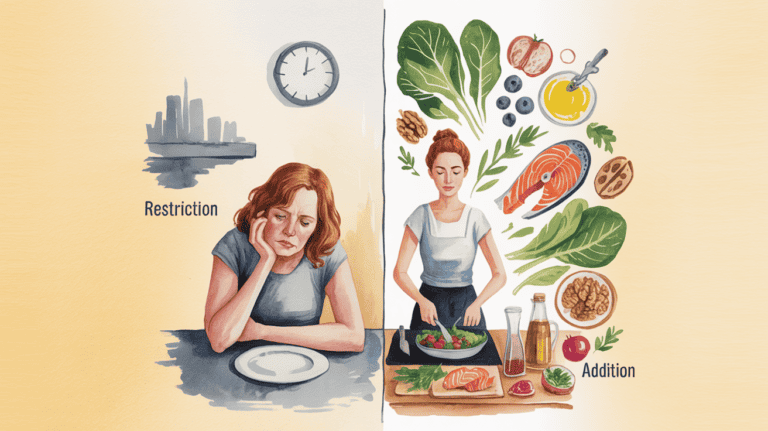
It’s a cycle, and breaking it starts with identifying and correcting the deficiencies. This is also why I encourage women to think about their diet not as a weight-loss tool but as an anti-inflammatory strategy. The Dietary Inflammatory Index provides a useful framework for understanding how your overall eating pattern scores on the inflammation spectrum.
A Practical Approach to Closing the Gaps
You don’t need to overhaul everything. Here’s a realistic framework:
Step 1: Get tested. At minimum, ask your doctor to check vitamin D, iron/ferritin, B12, and a basic metabolic panel that includes magnesium. These are standard, inexpensive labs that give you actionable information. I wrote a practical guide on how to have this conversation with your doctor.
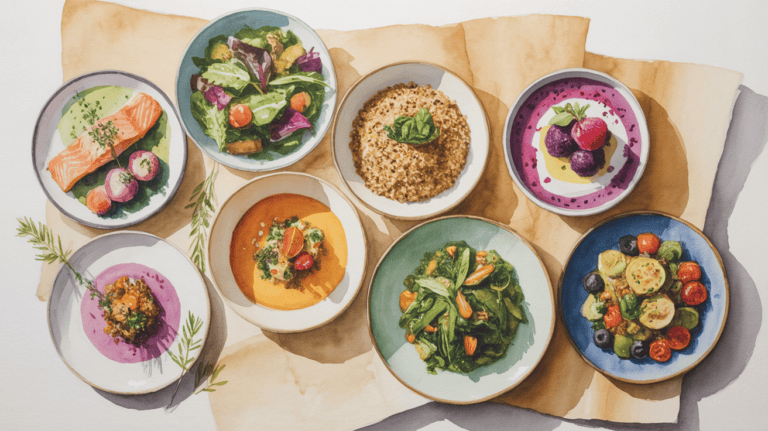
Step 2: Focus on nutrient-dense foods. The 5 anti-inflammatory swaps for women over 40 are designed to boost nutrient density without requiring a complete diet overhaul. Small changes — like swapping refined grains for whole grains, adding leafy greens daily, and using
Step 3: Supplement strategically. Not everything needs a supplement, and not all supplements are created equal. Based on the research, the nutrients most likely to need supplemental support in women over 40 are vitamin D, magnesium, omega-3s, and B12 (especially for women on acid-reducing medications or plant-based diets).
Step 4: Eat for synergy. Nutrients work better together. Vitamin C improves iron absorption. Vitamin D enhances calcium uptake. Omega-3s and vitamin E protect each other from oxidation. The 7-day anti-inflammatory meal plan is designed with these synergies in mind.
You’re Not Falling Apart — You’re Under-Resourced
If you’ve been feeling fatigued, foggy, achy, and emotionally fragile — and you’ve been told it’s “just hormones” or “just aging” — consider this: your body might be trying to do everything it’s supposed to do with inadequate raw materials.
Correcting nutrient deficiencies won’t cure every symptom. But it removes a significant obstacle to feeling better. And when you combine adequate nutrition with an anti-inflammatory eating pattern, the effects tend to be greater than the sum of their parts.
You deserve to know what’s actually going on in your body — and to have the tools to do something about it.
What nutrient will you focus on this week?
This article is for informational purposes only and is not a substitute for professional medical advice. Nutrient supplementation should be guided by lab testing and healthcare provider recommendations. For guidance on these conversations, see How to Talk to Your Doctor About Anti-Inflammatory Nutrition for Menopause.
References (click to expand)
Wylenzek, F., Bühling, K. J., & Laakmann, E. (2024). A systematic review on the impact of nutrition and possible supplementation on the deficiency of vitamin complexes, iron, omega-3-fatty acids, and lycopene in relation to increased morbidity in women after menopause. Archives of Gynecology and Obstetrics, 310(4), 2235–2245. https://doi.org/10.1007/s00404-024-07555-6
Erdélyi, A., Pálfi, E., Tűű, L., et al. (2024). The importance of nutrition in menopause and perimenopause — A review. Nutrients, 16(1), 27. https://doi.org/10.3390/nu16010027
Frontiers in Nutrition. (2025). Dietary interventions and nutritional strategies for menopausal health: A mini review. Frontiers in Nutrition, 12, 1702105. https://doi.org/10.3389/fnut.2025.1702105
Bird, J. K., Murphy, R. A., Ciappio, E. D., & McBurney, M. I. (2017). Risk of deficiency in multiple concurrent micronutrients in children and adults in the United States. Nutrients, 9(7), 655. https://doi.org/10.3390/nu9070655
Peters, B. A., Lin, J., Qi, Q., et al. (2022). Menopause is associated with an altered gut microbiome and estrobolome. mSystems, 7(3), e00273-22. https://doi.org/10.1128/msystems.00273-22
Holick, M. F. (2024). Vitamin D deficiency. New England Journal of Medicine, 357(3), 266–281. https://doi.org/10.1056/NEJMra070553