The Best Fermented Foods for Menopause (and Why Your Gut Microbiome Matters Now More Than Ever)
How Fermented Foods Support Inflammation Reduction, Hormone Metabolism, and Symptom Relief During the Menopausal Transition
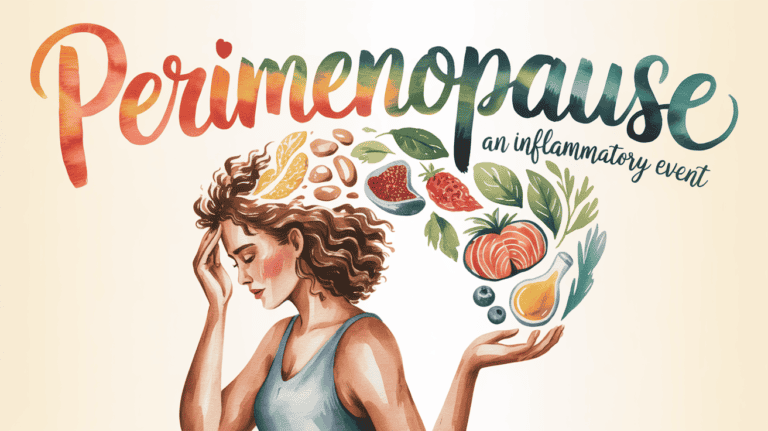
If there’s one dietary category that deserves more attention during perimenopause and menopause, it’s fermented foods. Not because they’re trendy — though they certainly have been — but because a landmark Stanford trial showed they do something few other dietary interventions can match: increase the diversity of your gut microbiome while simultaneously reducing inflammatory markers.
During a life stage defined by rising inflammation and shifting microbial populations, that combination is exactly what your body needs.
Short on Time? Start Here.
- Add one fermented food to one meal today. The easiest options: a cup of kefir at breakfast, a tablespoon of miso stirred into warm broth, or a few forkfuls of sauerkraut alongside dinner.
- Build toward 2-3 servings daily over a few weeks. Variety matters — different fermented foods contain different bacterial species.
- Look for “live active cultures” on the label. Shelf-stable sauerkraut in a can has been pasteurized — the bacteria are dead. You want raw, refrigerated fermented foods.
- Pair them with daily soy and fiber. Fermented foods create the gut environment that makes soy and flaxseed work better. The combination is the strategy.
This post may contain affiliate links to products that align with my evidence-based nutrition approach. As an Amazon Associate I earn from qualifying purchases. Full disclosure.
Why Your Gut Changes During Menopause (and Why That Matters for Everything)
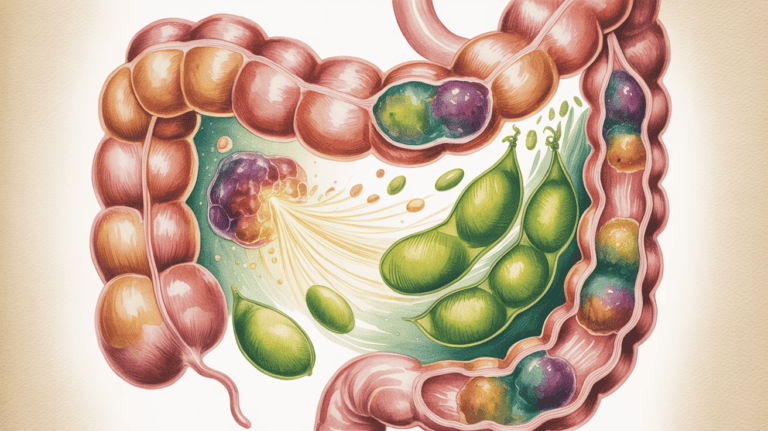
Your gut microbiome — the trillions of bacteria, fungi, and other microorganisms in your intestinal tract — is not a static system. It responds to what you eat, how you sleep, your stress levels, your medications, and your hormonal environment.
That last factor is the one most women aren’t told about.
A 2023 study demonstrated that ovarian hormone decline directly alters gut microbiome composition (Cross et al., 2023). As estrogen and progesterone fluctuate and decline during perimenopause, microbial diversity tends to decrease — often shifting toward compositions associated with increased inflammation. A 2025 review in npj Women’s Health confirmed this bidirectional relationship, describing a “menopausal shift” in which declining hormones and changing gut bacteria create a reinforcing cycle across oral, intestinal, and urogenital communities (Campos Cogo et al., 2025).
Here’s why this matters beyond digestion: your microbiome influences your immune system, your inflammatory signaling, your neurotransmitter production (roughly 90% of serotonin is produced in the gut), your hormone metabolism, and your body’s ability to use the phytoestrogens in foods like soy and flaxseed.
When the microbiome loses diversity during perimenopause, multiple downstream systems are affected simultaneously. This is where fermented foods enter the picture.
The Stanford Fermented Food Trial: The Study That Changed My Recommendations
In 2021, Stanford researchers published a landmark study in Cell — one of the most prestigious journals in biology — comparing two dietary interventions over ten weeks: a high-fiber diet and a high-fermented-food diet (Sonnenburg et al., 2021).
The results surprised even the researchers.
The fermented food group showed significantly greater increases in microbial diversity than the high-fiber group. They also showed measurable decreases in inflammatory markers, including IL-6 — one of the key pro-inflammatory cytokines that rises during perimenopause.
The participants who started with lower baseline microbial diversity saw the most dramatic improvements. That’s worth pausing on: fermented foods appear to be most beneficial for people whose microbiomes are already compromised — which describes many women going through the menopausal transition.
This doesn’t mean fiber isn’t important — it absolutely is, and I discuss its role in my article on equol and gut bacteria. But the Stanford study demonstrated that fermented foods offer something fiber alone doesn’t: they actively introduce microbial diversity and create metabolites that catalyze the growth of existing beneficial populations.
How Fermented Foods Support Menopause Specifically
Beyond general microbiome health, fermented foods connect to menopausal symptom management through several specific pathways.
Supporting equol production. Your gut bacteria determine whether you can convert soy isoflavones into equol — the compound most likely responsible for soy’s hot flash benefits. Only 25-30% of Western women currently produce equol. Fermented foods support the microbial diversity and bacterial populations associated with equol production. Combined with daily soy and diverse fiber, they create the gut environment most conducive to making soy work.
Reducing systemic inflammation. The Stanford trial showed direct decreases in IL-6 with fermented food consumption. IL-6 is one of the inflammatory cytokines that rises during the perimenopausal transition (McCarthy & Raval, 2020). Reducing it through dietary means is exactly what an anti-inflammatory approach targets.
Supporting neurotransmitter production. Approximately 90% of your body’s serotonin is produced in the gut by cells influenced by the surrounding bacterial environment. A healthier, more diverse microbiome supports more consistent serotonin production — relevant for the mood changes, anxiety, and sleep disruption that accompany perimenopause.
Enhancing nutrient absorption. Fermentation partially breaks down food matrices, making nutrients more bioavailable. Fermented dairy delivers calcium and protein in forms easier to absorb. For women in perimenopause — when bone density is declining and protein needs are increasing — this enhanced bioavailability matters.
The Best Fermented Foods for Menopause: A Practical Guide
Not all fermented foods are equally beneficial, and the labeling can be confusing. Here’s what to prioritize, what to look for, and how to use each one.
Kefir — The Diversity Powerhouse
A fermented milk drink with significantly greater microbial diversity than yogurt. Traditional kefir contains dozens of bacterial and yeast species, compared to the two to six strains in most commercial yogurts.
What to buy: Plain, unsweetened kefir with “live active cultures.” Lifeway is widely available and contains 12 live cultures. Avoid flavored varieties — they typically pack in added sugar. If you’re dairy-sensitive, coconut kefir is an alternative, though it contains fewer strains.
How to use it: Drink it straight, pour it over granola, blend into smoothies, or use as a base for overnight oats with ground flaxseed. Start with half a cup if you’re new to fermented foods.
Plain Yogurt — The Familiar Starting Point
Milk fermented by specific bacterial cultures, primarily Lactobacillus bulgaricus and Streptococcus thermophilus, though many brands add additional strains.
What to buy: Plain yogurt with “live active cultures.” Full-fat or 2% rather than fat-free — the fat supports absorption of fat-soluble vitamins and satiety. A single cup of flavored yogurt can contain 20-30 grams of added sugar. Skip it.
How to use it: With fruit and ground flaxseed for breakfast. As a base for dressings. Mixed with herbs as a vegetable dip.
Sauerkraut (Raw, Refrigerated) — The Shelf Matters
Fermented cabbage, traditionally made with just cabbage and salt. Produces Lactobacillus species and other beneficial bacteria.
The critical distinction: The sauerkraut in the shelf-stable aisle — in a can or in a jar at room temperature — has been heat-pasteurized. The bacteria are dead. It has zero probiotic benefit. You need raw, unpasteurized sauerkraut from the refrigerated section. Look for labels that say “raw,” “unpasteurized,” or “naturally fermented.”
How to use it: As a side dish with any meal. On sandwiches or grain bowls. A few forkfuls alongside eggs at breakfast. You don’t need a large serving — two to three tablespoons provides meaningful microbial input.
Kimchi — Flavor Plus Function
A Korean fermented vegetable dish, typically made with napa cabbage, garlic, ginger, and chili. Produces diverse Lactobacillus species.
Why it’s a standout: Kimchi delivers probiotics plus the anti-inflammatory compounds in garlic and ginger. Same rules as sauerkraut — buy raw, refrigerated, unpasteurized.
How to use it: As a side dish. In grain bowls. On top of rice. Stirred into scrambled eggs. Added to soups at the very end of cooking (to preserve the bacteria).
Miso — The Two-in-One for Menopause
A paste made from fermented soybeans, often combined with rice or barley. Centuries of traditional use in Japanese cuisine.
Why it’s uniquely valuable: Miso delivers fermentation benefits and soy isoflavones in a single food. Probiotic support plus phytoestrogenic compounds. This makes it particularly powerful within the anti-inflammatory framework for hot flashes.
How to use it: Stir one tablespoon of miso paste into a cup of warm (not boiling) water. Boiling kills the beneficial organisms. Add scallions, tofu cubes, or greens for a more substantial soup. Also works as a salad dressing base, marinade, or flavor enhancer.
Types: White (shiro) miso is mildest and most approachable. Yellow is moderate. Red (aka) is strongest. All are beneficial.
Tempeh — Protein Plus Probiotics
Whole soybeans bound together by mold fermentation. Firm texture, nutty flavor.
Why it’s valuable: Like miso, tempeh delivers fermentation benefits and soy isoflavones. It’s also one of the highest-protein plant foods available (~15g per three-ounce serving) — relevant for the muscle preservation that becomes critical during perimenopause.
How to use it: Slice thin and pan-sear with soy sauce and ginger. Crumble into stir-fries, tacos, or grain bowls.
Kombucha — With a Caveat
Fermented tea with live bacteria and yeast. Effervescent, available in many flavors.
The honest take: Kombucha does contain beneficial organisms, but its probiotic content varies significantly between brands and batches. Sugar content also varies — some commercial kombuchas contain more sugar than you’d expect. Read labels, choose options with under 5 grams per serving.
Kombucha is fine as part of a broader strategy, but I wouldn’t rely on it as your primary source. Kefir, sauerkraut, kimchi, and miso are more consistently beneficial.
How to Start: A Three-Week Build
Week 1: Add one fermented food to one meal. The lowest-barrier options:
– A cup of kefir at breakfast (or blended into a smoothie)
– A tablespoon of miso in warm water as an afternoon broth
– Two tablespoons of sauerkraut or kimchi alongside dinner
Week 2: Maintain the first addition, add a second at a different meal. Variety matters — different fermented foods contain different species.
Week 3 and beyond: Build toward 2-3 servings daily from at least two different sources. Miso at lunch, kefir at breakfast, kimchi at dinner is one example.
If you experience digestive discomfort (gas, bloating) when starting: reduce serving size and increase gradually. Some initial adjustment is normal as your microbiome adapts. If discomfort persists beyond two weeks, reduce frequency and discuss with your healthcare provider.
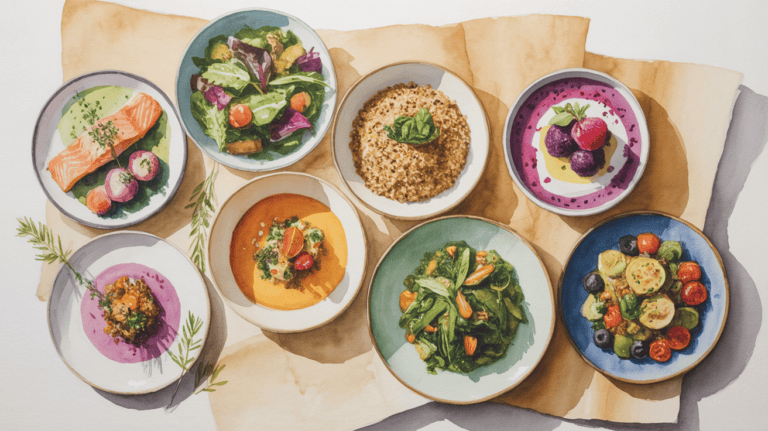
(For how fermented foods fit into a full week of anti-inflammatory eating, see my 7-day meal plan for perimenopause and menopause.)
Fermented Foods vs. Probiotic Supplements
Can you just take a probiotic capsule instead? You can — but fermented foods offer advantages supplements don’t.
Greater microbial diversity. A typical supplement contains 1-15 strains. A single serving of kefir may contain 30+, plus yeasts. The Stanford trial used fermented foods, not supplements.
Metabolites and postbiotics. Fermented foods contain not just bacteria but also the metabolites produced during fermentation — short-chain fatty acids, bioactive peptides, vitamins. These have independent anti-inflammatory effects.
Food matrix benefits. Calcium in kefir, isoflavones in miso, protein in tempeh — the nutrients come packaged with bacteria in a matrix that supports survival through digestion.
Cost. A cup of kefir or a few tablespoons of sauerkraut daily costs significantly less than most quality probiotic supplements.
My recommendation: prioritize fermented foods as your primary strategy. Consider a supplement as an addition if you’re recovering from antibiotics, have significant digestive symptoms, or can’t consume fermented foods consistently.
How It All Fits Together
Fermented foods aren’t a standalone solution. They’re the piece that ties the microbial ecosystem together within a broader anti-inflammatory pattern:
- Daily soy provides isoflavones → fermented foods support the bacteria that convert them to equol
- Ground flaxseed provides fiber and lignans → fermented foods support the bacteria that activate the lignans
- Diverse produce provides prebiotic fibers → fermented foods introduce the species that feed on those fibers
- Extra virgin
olive oil provides anti-inflammatory polyphenols → a healthy microbiome enhances polyphenol metabolism
No single food works in isolation. The power is in the pattern. And fermented foods are the catalyst that makes the rest of it work better.
Start with one serving today. Your gut bacteria will notice, even if you don’t feel it yet. Give them a few weeks.
This article is for educational purposes and is not a substitute for personalized medical advice. If you have a compromised immune system, are severely immunocompromised, or are unsure how dietary changes interact with your current treatment plan, please discuss with your healthcare provider. (Here’s a guide for that conversation.)
References (click to expand)
Campos Cogo, S., et al. (2025). Menopausal shift on women’s health and microbial niches. *npj Women’s Health*, 3, 5. [https://doi.org/10.1038/s44294-024-00050-y](https://doi.org/10.1038/s44294-024-00050-y)
Cross, T. L., Kasahara, K., & Rey, F. E. (2023). Sexual dimorphism of cardiometabolic dysfunction: Gut microbiome in the frame. *Cell Host & Microbe*, 31(4), 482-492. [https://doi.org/10.1016/j.chom.2023.06.005](https://doi.org/10.1016/j.chom.2023.06.005)
McCarthy, M., & Raval, A. P. (2020). The peri-menopause in a woman’s life: A systemic inflammatory phase that enables later neurodegenerative disease. *Journal of Neuroinflammation*, 17, 317. [https://doi.org/10.1186/s12974-020-01998-9](https://doi.org/10.1186/s12974-020-01998-9)
Sonnenburg, J. L., Wastyk, H. C., Fragiadakis, G. K., et al. (2021). Gut-microbiota-targeted diets modulate human immune status. *Cell*, 184(16), 4137-4153. [https://doi.org/10.1016/j.cell.2021.06.019](https://doi.org/10.1016/j.cell.2021.06.019)