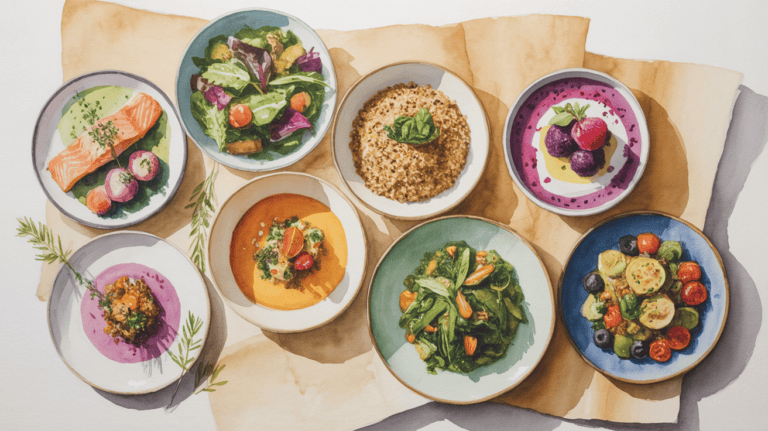
5 Anti-Inflammatory Swaps for Women Over 40 (Start This Week)
Simple Replacements That Reduce Inflammation Without Overhauling Your Diet
You don’t need a meal plan, a detox, or a complete dietary overhaul to start reducing inflammation. You need five strategic swaps — replacing specific items you’re probably already consuming with versions that actively support your body’s anti-inflammatory processes.
Behavioral research tells us why swaps work better than diets: replacement is easier than elimination. You’re not taking something away. You’re upgrading what’s already in the slot.
Here are five swaps you can start this week. One per week if you prefer. Within five weeks, you’ve meaningfully shifted the inflammatory quality of your daily diet.
Short on Time? Here Are All Five.
- Vegetable oil → Extra virgin olive oil
- Chips/crackers → Edamame with sea salt
- Flavored yogurt → Plain kefir + berries
- Salt-first seasoning → Turmeric + black pepper blend
- Sugary afternoon coffee → Green tea or matcha
Pick one. Start today. Add another next week.
This post may contain affiliate links to products that align with my evidence-based nutrition approach. As an Amazon Associate I earn from qualifying purchases. Full disclosure.
Swap 1: Vegetable Oil → Extra Virgin Olive Oil
What you’re removing: Soybean oil, corn oil, canola oil, or sunflower oil — all high in omega-6 fatty acids that, in excess, promote pro-inflammatory signaling.
What you’re adding: Extra virgin
How to do it: Use EVOO for sautéing, roasting, and dressings. Yes, you can cook with it — its smoke point (375-405°F) covers most home cooking. Look for “extra virgin” specifically, not “light” or “pure.” Store away from heat and light.
This is the swap I’d start with if you could only pick one. It changes the inflammatory baseline of nearly everything you cook.
Swap 2: Chips or Crackers → Edamame with Sea Salt
What you’re removing: Refined-grain snacks cooked in omega-6-heavy oils that spike blood sugar and provide minimal nutrition.
What you’re adding: One cup of shelled edamame delivers approximately 18 grams of protein, 8 grams of fiber, soy isoflavones that support estrogen receptor activity during menopause, plus magnesium, folate, and iron.
If you’ve read my articles on soy safety or equol and gut bacteria, you know why consistent daily soy matters during the menopausal transition. This swap puts a serving into your routine with zero cooking.
How to do it: Keep frozen shelled edamame in your freezer. Microwave for three minutes. Add sea salt. Done. Total time: 3 minutes. Total cost: about 75 cents.
Swap 3: Flavored Yogurt → Plain Kefir + Berries
What you’re removing: Flavored yogurt typically contains 15-30 grams of added sugar per serving. Added sugar promotes inflammation through insulin spikes, feeds inflammatory gut bacteria, and increases pro-inflammatory cytokine production.
What you’re adding: Plain kefir — one of the most microbially diverse fermented foods available — plus fresh or frozen berries, which are among the richest dietary sources of anthocyanins (anti-inflammatory polyphenols).
A 2021 Stanford trial showed that a high-fermented-food diet increased gut microbial diversity and decreased inflammatory markers including IL-6 (Sonnenburg et al., 2021). Kefir is one of the most practical ways to get that benefit.
How to do it: Pour a cup of plain kefir, add a handful of berries. If it’s too tart, add a small drizzle of honey — still a fraction of the sugar in flavored yogurt. Your palate adjusts within a week or two. Top with ground flaxseed and you’ve packed three anti-inflammatory mechanisms into a single bowl.
Swap 4: Heavy Salt Dependence → Turmeric + Black Pepper Blend
What you’re changing: Not eliminating salt — just changing what you reach for first when seasoning food.
What you’re adding: Turmeric contains curcumin, one of the most studied anti-inflammatory compounds in food science. Black pepper contains piperine, which enhances curcumin absorption (Shoba et al., 1998).
The amounts from food seasoning are modest compared to a curcumin supplement. But this is about cumulative daily inputs — the same principle that makes the
How to do it: Make or buy a turmeric-black pepper blend. Keep it on your dining table where the salt shaker sits. Shake it on roasted vegetables, eggs, rice, soups, avocado toast. Use salt too — but reach for the turmeric first.
Swap 5: Sugary Afternoon Coffee → Green Tea or Matcha
What you’re removing: Flavored lattes, sweetened iced coffees, and energy drinks that deliver 30-50 grams of sugar alongside a harsh caffeine spike.
What you’re adding: Green tea contains EGCG (epigallocatechin gallate), a potent anti-inflammatory polyphenol, plus L-theanine, an amino acid that promotes calm focus. The caffeine is roughly one-third of coffee, but the L-theanine combination produces more sustained, less jittery energy.
Matcha — powdered whole green tea leaf — delivers higher concentrations of both EGCG and L-theanine since you consume the entire leaf.
How to do it: Swap your afternoon caffeine source. Make a simple matcha latte with unsweetened plant milk, or brew a cup of green tea. Zero added sugar, anti-inflammatory polyphenols, and better-quality energy.
Why Swaps Beat Diets
Each of these swaps replaces an inflammatory input with an anti-inflammatory one — without requiring you to learn new recipes, buy unfamiliar ingredients, or restructure your meals.
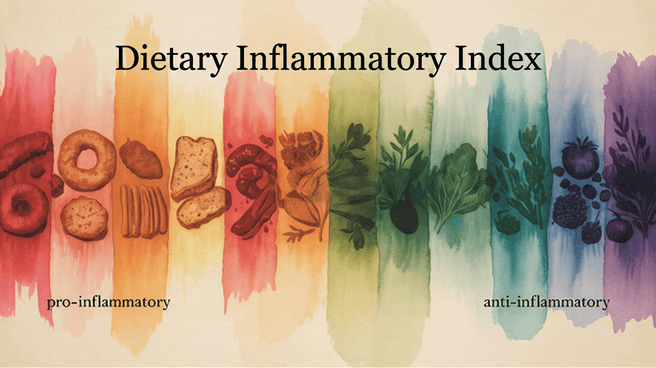
Start with one. Add another next week. Within five weeks, you’ve shifted the Dietary Inflammatory Index score of your daily diet in a meaningful direction. And because these are replacements, not additions or restrictions, they’re sustainable long-term.
If you want to understand why reducing inflammation matters so much during perimenopause — and how hot flashes, brain fog, joint pain, mood changes, and fatigue all connect to the same inflammatory root — read my article on perimenopause as an inflammatory event. It’s the bigger picture that makes these swaps make sense.
And when you’re ready for a full week of anti-inflammatory eating, the 7-day meal plan is built around exactly these principles.
This article is for educational purposes and does not replace individualized medical advice. (Not sure how to bring up dietary changes with your doctor? Start here.)
References (click to expand)
Beauchamp, G. K., Keast, R. S. J., Morel, D., et al. (2005). Phytochemistry: Ibuprofen-like activity in extra-virgin
Shoba, G., Joy, D., Joseph, T., Majeed, M., Rajendran, R., & Srinivas, P. S. (1998). Influence of piperine on the pharmacokinetics of curcumin in animals and human volunteers. *Planta Medica*, 64(4), 353-356. [https://doi.org/10.1055/s-2006-957450](https://doi.org/10.1055/s-2006-957450)
Sonnenburg, J. L., Wastyk, H. C., Fragiadakis, G. K., et al. (2021). Gut-microbiota-targeted diets modulate human immune status. *Cell*, 184(16), 4137-4153. [https://doi.org/10.1016/j.cell.2021.06.019](https://doi.org/10.1016/j.cell.2021.06.019)