Do Detox Diets Work? What an Anti-Inflammatory Dietitian Wants You to Know
A Registered Dietitian’s Evidence-Based Guide to Detoxification, Liver Health, and What Actually Reduces Your Body’s Toxic Load
Let’s talk about detoxing — because at some point, someone has probably told you to try a cleanse. Maybe it was a juice fast. Maybe it was a kit from the supplement aisle with dramatic claims about flushing toxins. Maybe you googled “how to detox” after a rough week and got buried in an avalanche of charcoal lemonades and celery juice protocols.
Here’s what I want you to know right away: the instinct behind wanting to detox is completely valid. You feel like something isn’t right. You’re sluggish, inflamed, bloated, brain-foggy, or just off — and you want to do something about it. That impulse deserves a real answer, not a marketing gimmick.
And here’s the honest truth: your body already has a detoxification system. It’s extraordinary. But it does need specific nutritional support to work well — and most detox products don’t provide it. What does? An anti-inflammatory, nutrient-dense way of eating that supports the actual biochemistry of how your liver processes and eliminates harmful compounds.
Short on Time? Do These Three Things First.
1. Eat cruciferous vegetables (broccoli, Brussels sprouts, cauliflower) at least 4-5 times per week — they contain compounds that directly activate your liver’s detoxification enzymes.
2. Skip the juice cleanse and focus on adequate protein instead — your liver needs amino acids like glycine, taurine, and cysteine to complete detoxification.
3. Add a daily serving of sulfur-rich foods (garlic, onions, eggs) to support glutathione production — your body’s most powerful internal antioxidant.
This post may contain affiliate links to products that align with my evidence-based nutrition approach. As an Amazon Associate I earn from qualifying purchases. Full disclosure.
What the Research Actually Says About Detox Diets
I’ll be direct: the clinical evidence for commercial detox diets is remarkably thin. A systematic review in the Journal of Human Nutrition and Dietetics looked for randomized controlled trials evaluating the effectiveness of commercial detox diets in humans — and found none (Klein & Kiat, 2015). A handful of small clinical studies showed that certain detox protocols could enhance some markers of liver detoxification, but the researchers noted these were hampered by flawed methodologies, small sample sizes, and lack of control groups.
A 2024 review from Texas A&M confirmed what most dietitians already suspected: there is no compelling clinical evidence that detox diets lead to meaningful toxin elimination beyond what your body already does on its own. Even more concerning, colon cleanses — a popular component of many detox programs — were associated with twice the risk of severe medical outcomes compared to simple vitamin supplementation (Texas A&M School of Public Health, 2024).
The FDA and FTC have taken action against companies selling detox products for hidden ingredients, false marketing claims, and unapproved uses. This isn’t a fringe concern — it’s a consumer safety issue.
So what about the weight loss people experience on cleanses? That’s primarily from calorie restriction, water loss, and reduced food volume in the digestive tract. A 2020 randomized controlled trial of 45 women found that a plant-based detox diet reduced body fat — but no more than a standard calorie-restricted diet of the same duration (Becker et al., 2020). In other words, it wasn’t the “detox” component doing the work. It was eating less.
This doesn’t mean your body doesn’t need support eliminating harmful compounds. It absolutely does. But the way to provide that support looks nothing like a three-day juice cleanse.
How Your Body Actually Detoxifies (and Why It Matters)
Your liver is the primary detoxification organ, and it operates through a two-phase process. Understanding this — even at a basic level — completely changes how you think about supporting your body.
Phase I uses a family of enzymes called cytochrome P450 to transform fat-soluble toxins into intermediate compounds. Think of it as the first pass — your liver takes something harmful and begins breaking it down. This phase requires antioxidants to manage the reactive intermediates it produces, including glutathione, vitamins C and E, selenium, and polyphenols from colorful plant foods.
Phase II takes those intermediates and attaches molecules to them — making them water-soluble so your body can excrete them through urine or bile. This phase runs through six major pathways (including glucuronidation, sulfation, and glutathione conjugation), and each one requires specific nutrients. This is where amino acids like glycine, taurine, and glutamine become essential. It’s also where B vitamins, magnesium, and sulfur-containing compounds play a critical role.
Here’s the key insight: if Phase I is running efficiently but Phase II can’t keep up — because you’re low on protein, B vitamins, or sulfur compounds — you end up with a buildup of partially processed intermediates that can actually be more reactive and damaging than the original toxins. This is what happens when you do a juice cleanse that strips away protein and key nutrients while flooding your system with simple sugars.
Your body doesn’t need a detox kit. It needs the raw materials to run its own detoxification system properly.
The Foods That Actually Support Detoxification
This is where it gets practical — and where an anti-inflammatory diet turns out to be the most evidence-based “detox” available.
Cruciferous vegetables are the standout performers. Broccoli, Brussels sprouts, cauliflower, cabbage, kale, and watercress contain glucosinolates — compounds that your body converts into sulforaphane and indole-3-carbinol. These act as what researchers call “bifunctional modulators”: they can inhibit certain Phase I enzymes (slowing down the creation of harmful intermediates) while activating Phase II enzymes (speeding up their elimination). Clinical studies have shown that consuming 5-10 servings per day of cruciferous vegetables measurably induced Phase II glucuronidation enzymes. Even more modest amounts — around 250 grams of Brussels sprouts or broccoli daily — showed similar effects (Hodges & Minich, 2015).
Sulfur-rich foods — garlic, onions, leeks, eggs, and poultry — provide the building blocks for glutathione, often called the “master antioxidant.” Glutathione is the most abundant antioxidant in your body and is critical for Phase II conjugation. It directly neutralizes reactive oxygen species, modulates the Nrf2 pathway (your body’s master switch for antioxidant defense), and can regenerate itself in the liver. A 2024 study found that a blend of nutrients including NAC, milk thistle, broccoli concentrate, and alpha-lipoic acid increased plasma glutathione by 74% over 28 days — demonstrating that targeted nutrition meaningfully supports this system (Panda et al., 2023).
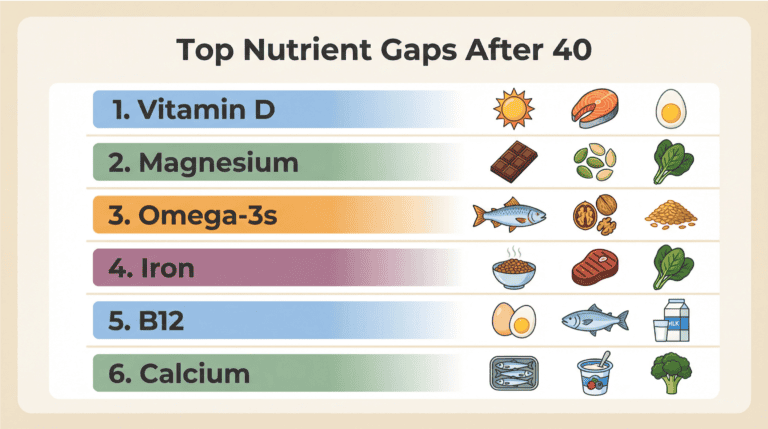
Adequate protein is non-negotiable. Your liver needs amino acids — glycine, taurine, cysteine, glutamine — to complete Phase II detoxification. This is why juice fasts and extremely low-protein cleanses can actually impair your body’s ability to eliminate toxins. If you’re a woman over 40, protein needs are already higher than you’ve probably been told, and skipping it in the name of “detoxing” works against you. For more on how protein needs shift in midlife, see my guide to common nutrient deficiencies in women over 40.
Colorful plant foods — berries, turmeric, green tea,
For a practical starting point, my 7-day anti-inflammatory meal plan includes many of these liver-supporting foods built right in.
The Inflammation Connection You’re Not Hearing About
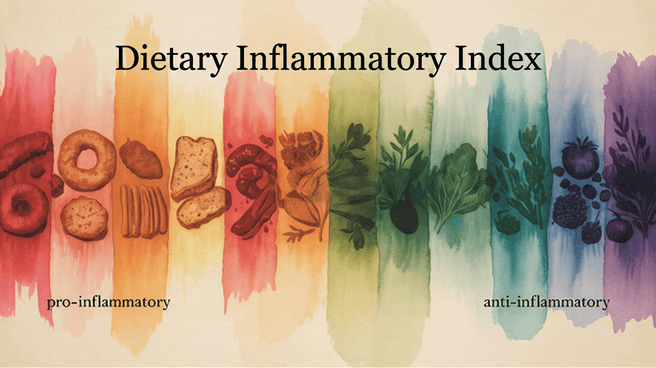
Here’s what detox marketing completely misses: the reason you feel sluggish, foggy, bloated, and “toxic” usually isn’t a buildup of unnamed toxins. It’s chronic, low-grade inflammation.
When inflammation is elevated — from dietary triggers, poor sleep, stress, hormonal shifts, or gut imbalance — your entire system runs less efficiently. Your liver’s detoxification capacity can be impaired by inflammatory cytokines. Your gut lining becomes more permeable, allowing compounds into your bloodstream that shouldn’t be there. Your brain fog isn’t from “toxins” — it’s from neuroinflammation.
If you’re in your 40s or 50s, hormonal changes make this even more relevant. The transition through perimenopause is itself an inflammatory event, with measurable increases in inflammatory markers as estrogen declines. I’ve written extensively about this in perimenopause is an inflammatory event — and understanding this connection is far more useful than any cleanse protocol.
The anti-inflammatory approach addresses the actual root cause of why you feel the way you feel. It supports your liver. It calms systemic inflammation. It restores gut integrity. And it does this sustainably — not for three days, but as a way of eating that becomes second nature.
What to Do Instead of a Detox Cleanse
If you’re drawn to the idea of a reset, here’s what I’d recommend — and none of it requires buying a kit or drinking cayenne-lemon water for a week.
Focus on what you add, not what you eliminate. This is the foundation of the anti-inflammatory approach: more vegetables (especially cruciferous), more omega-3-rich foods, more berries, more herbs and spices like turmeric and ginger. For five simple swaps that make a meaningful difference, check out my anti-inflammatory swaps for women over 40.
Support your gut. A healthy gut lining is your first line of defense against compounds entering your bloodstream that shouldn’t be there. Fermented foods — yogurt, kefir, kimchi, sauerkraut — support microbial diversity and gut barrier function. I break this down in best fermented foods for menopause, but the benefits apply far beyond menopause.
Prioritize sleep. Your brain has its own detoxification system — the glymphatic system — that clears metabolic waste primarily during deep sleep. No supplement replaces that. If sleep is something you’re struggling with, tart cherry juice is one evidence-based option worth exploring.
Stay well-hydrated. Your kidneys are a major excretory organ, and adequate hydration supports their ability to filter and eliminate waste products. This doesn’t require alkaline water or infused detox blends — just consistent water intake throughout the day.
Consider targeted supplements — thoughtfully. A high-quality turmeric supplement with piperine for absorption, such as Doctor’s Best High Absorption Curcumin, supports both anti-inflammatory pathways and liver health. Milk thistle has a long track record for hepatic support. And a quality omega-3 supplement addresses inflammation systemically. But these work best as part of an anti-inflammatory dietary pattern — not as replacements for one.
The Bottom Line
You don’t need a detox. You need an anti-inflammatory diet that gives your body what it’s actually asking for: the nutrients to run its own remarkably capable detoxification system, and the compounds that calm the chronic inflammation making you feel unwell in the first place.
The desire to “reset” is real and valid. But the answer isn’t a three-day cleanse — it’s a sustainable way of eating that supports your liver, your gut, your hormones, and your energy for the long term.
You deserve better than marketing dressed up as medicine. And the fact that you’re reading this — looking for real answers instead of quick fixes — puts you exactly where you need to be.
What’s the one thing you’ll try this week?
This content is for educational purposes and is not a substitute for personalized medical advice. If you’re managing a health condition or taking medications, talk with your healthcare provider before making significant dietary changes. Need help with that conversation? I wrote a guide on how to talk to your doctor about anti-inflammatory nutrition.
References (click to expand)
Becker, A., Götte, M., & Eifler, S. (2020). Effects of a commercial detox diet on body composition and metabolic parameters in overweight women. *Wellnessup Study*. https://doi.org/10.1016/j.clnu.2020.01.015
Hodges, R. E., & Minich, D. M. (2015). Modulation of metabolic detoxification pathways using foods and food-derived components: A scientific review with clinical application. *Journal of Nutrition and Metabolism*, 2015, 760689. https://doi.org/10.1155/2015/760689
Klein, A. V., & Kiat, H. (2015). Detox diets for toxin elimination and weight management: A critical review of the evidence. *Journal of Human Nutrition and Dietetics*, 28(6), 675–686. https://doi.org/10.1111/jhn.12286
Panda, V. S., et al. (2023). A guided 28-day metabolic detoxification program supports phase II detoxification enzymes and antioxidant balance in healthy participants. *Nutrients*, 15(17), 3822. https://doi.org/10.3390/nu15173822
Texas A&M School of Public Health. (2024). Detox diets: What the evidence actually shows. Retrieved from https://publichealth.tamu.edu
U.S. Food and Drug Administration. (2023). Beware of products promising miracle cures. Retrieved from https://www.fda.gov/consumers