What Are AGEs? How Advanced Glycation End Products Drive Inflammation and Aging
An Evidence-Based Guide from a Registered Dietitian — On the Compounds Hiding in Your Cooking Methods
There’s a concept in nutrition science that most people have never heard of, but that directly affects how fast you age, how much inflammation your body carries, and your risk for conditions like diabetes, heart disease, and Alzheimer’s. It has nothing to do with which diet you follow or how many calories you eat. It’s about what happens to food when it’s cooked.
They’re called advanced glycation end products — or AGEs. And once you understand them, you’ll never look at a chargrilled steak or a piece of crispy bacon quite the same way.
This isn’t about fear. It’s about understanding a modifiable factor in chronic inflammation that you can actually do something about — starting with your next meal.
Short on Time? Start With These Three Things.
- Cook with moisture and lower heat more often — steaming, poaching, braising, slow-cooking, and stewing produce dramatically fewer AGEs than grilling, frying, or roasting at high temperatures.
- Use acidic marinades before cooking meat — lemon juice and vinegar significantly reduce AGE formation during cooking (research shows up to 50% reduction).
- Eat more foods that are naturally low in AGEs — fruits, vegetables, legumes, whole grains, and dairy are all low-AGE even after cooking.
Start with these. Then come back when you’re ready.
This post may contain affiliate links to products that align with my evidence-based nutrition approach. As an Amazon Associate I earn from qualifying purchases. Full disclosure.
AGEs, Explained Simply
Here’s what’s happening at a molecular level: when sugar molecules attach to proteins or fats without the help of enzymes, they create new compounds called advanced glycation end products. This process is called glycation, and it happens both inside your body (endogenously) and in your food (exogenously).
Your body produces some AGEs naturally as part of normal metabolism — and in small amounts, your system can handle them. But when AGE levels get too high — either from your diet, your blood sugar levels, or both — your body can’t clear them fast enough. They accumulate in tissues and trigger a cascade of oxidative stress and inflammation.
Think of AGEs like rust on metal. A little surface oxidation is normal. But if it accumulates unchecked, it damages the structure underneath.
The key receptor involved is called RAGE (receptor for advanced glycation end products). When AGEs bind to RAGE receptors on your cells, they activate NF-κB — the master switch for inflammatory gene expression. This triggers the production of pro-inflammatory cytokines including TNF-α, IL-1, and IL-6 — the same markers associated with chronic disease (Twarda-Clapa et al., 2022).
A 2025 comprehensive review confirmed that AGE accumulation in tissues is associated with a range of diseases including diabetes, cardiovascular disease, and neurodegeneration — all through the common mechanisms of oxidative stress, chronic inflammation, and direct protein cross-linking (Chen et al., 2025).
Where Do Dietary AGEs Come From?
This is where it gets practical. The amount of AGEs in your food depends on three main factors:
- Temperature — higher cooking temperatures create dramatically more AGEs
- Moisture — dry heat methods (grilling, frying, roasting, broiling) produce far more AGEs than moist heat methods (steaming, boiling, poaching, stewing)
- Food type — animal-based foods high in fat and protein are the most prone to AGE formation
The landmark AGE database study by Uribarri and colleagues measured AGE content across 549 common foods and found that dry heat cooking can increase AGE levels by 10- to 100-fold compared to the uncooked state (Uribarri et al., 2010). The same piece of chicken breast can have vastly different AGE content depending on whether you poach it or grill it.
Highest AGE Foods
- Bacon, hot dogs, and processed meats (among the highest AGE foods measured)
- Grilled, fried, or broiled meat, poultry, and fish
- Roasted nuts
- Fried eggs (vs. scrambled or poached)
- Crispy, browned baked goods
- Many fast foods and ultra-processed items
Lowest AGE Foods
- Fruits and vegetables (low even after cooking)
- Whole grains, pasta, and bread (interior, not the crust)
- Legumes — beans, lentils, chickpeas
- Milk, yogurt, and most dairy products
- Foods cooked with moist heat at lower temperatures
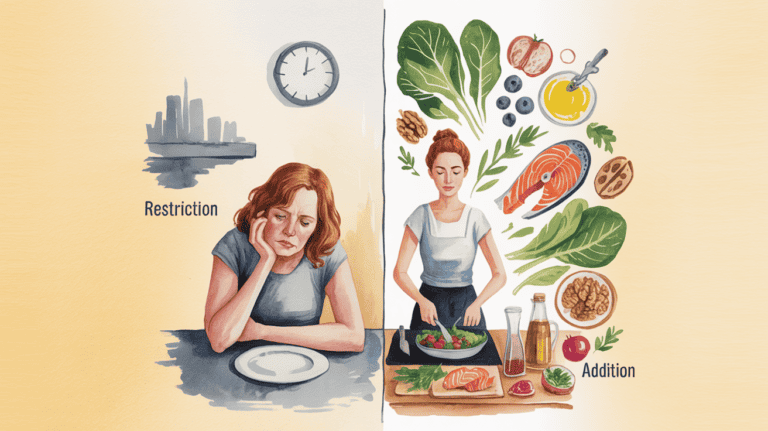
Here’s the reassuring part: the same foods that form the foundation of an anti-inflammatory diet — colorful produce, whole grains, legumes, healthy fats — are naturally low in AGEs. Eating an anti-inflammatory pattern automatically reduces your AGE exposure.
AGEs, Inflammation, and Specific Health Risks
Diabetes and Insulin Resistance
The AGE-diabetes connection runs in both directions. High blood sugar accelerates endogenous AGE production (more sugar available for glycation reactions), and high dietary AGE intake worsens insulin resistance.
A 2023 review specifically examined the role of dietary AGEs in the insulin resistance of aging and concluded that AGE-rich diets contribute significantly to age-related metabolic decline. Importantly, the researchers found that restricting dietary AGE intake improved insulin sensitivity in human trials — suggesting this is a modifiable factor (Uribarri, 2023).
An earlier randomized controlled trial found that obese individuals with metabolic syndrome who followed a low-AGE diet for one year showed improved insulin sensitivity compared to controls — without calorie restriction (Vlassara et al., 2016).
Cardiovascular Disease
AGEs damage blood vessels in multiple ways: they cross-link collagen in arterial walls (causing stiffness), promote LDL oxidation (a key step in atherosclerosis), and activate the RAGE-NF-κB inflammatory cascade in vascular tissue. The accumulation of AGEs in blood vessel walls is a recognized mechanism in both diabetic and age-related cardiovascular disease.
Brain Health and Neurodegeneration
AGEs accumulate in brain tissue and are found in higher concentrations in people with Alzheimer’s disease. The AGE-RAGE activation of inflammatory pathways in the brain promotes neuroinflammation — which is increasingly understood as a driver of cognitive decline. A 2023 study found that serum levels of methylglyoxal (an AGE precursor) were associated with increased cognitive decline in elderly individuals.
Skin Aging and Collagen Damage
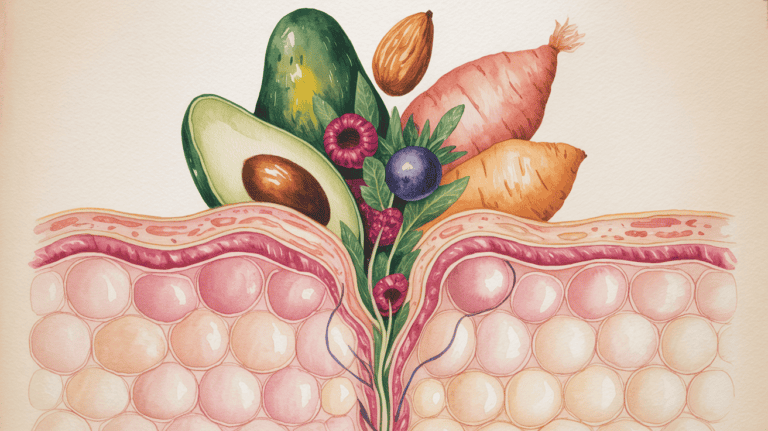
Collagen is the most glycated protein in the body — and it’s also the most abundant structural protein in your skin, joints, and connective tissue. When AGEs cross-link collagen fibers, they become stiff and lose elasticity. This is a direct mechanism behind both skin aging (wrinkles, loss of firmness) and joint stiffness.
Women’s Health Connections
Particularly relevant for this audience: research has linked high dietary AGE intake in women to elevated androgens, anti-Müllerian hormone, and insulin levels — factors associated with ovarian dysfunction and PCOS (Merhi, 2019). This connection between AGEs, hormonal disruption, and inflammation is an active area of research.
How to Reduce Your AGE Exposure
The good news: you don’t have to avoid specific foods. You primarily need to change how you cook and emphasize foods that are naturally low in AGEs.
Cooking Modifications
| Instead Of | Try This | AGE Reduction |
|---|---|---|
| Grilling or broiling meat | Slow-cooking, braising, poaching, or stewing | Up to 50-80% lower |
| Frying eggs | Scrambling or poaching at lower heat | Significantly lower |
| Roasting at high heat | Roasting at lower temperatures with moisture | Moderate reduction |
| Dry-heat cooking without preparation | Marinating in lemon juice or vinegar first | Up to 50% reduction |
| Microwaving or toasting bread | Eating bread fresh or lightly warmed | Lower AGE exposure |
The Uribarri database showed that acidic marinades dramatically reduce AGE formation. Marinating meat in lemon juice or vinegar for just one hour before cooking cut AGE levels significantly. This means that a citrus-marinated, slow-cooked chicken thigh has a fraction of the AGEs of a plain grilled one — and arguably tastes better too.
Dietary Strategies
- Increase fruits, vegetables, legumes, and whole grains — these are low-AGE at baseline and rich in the antioxidants and polyphenols that help your body clear AGEs
- Choose moist cooking methods more often — soups, stews, steamed vegetables, poached fish
- Use acidic ingredients generously — lemon juice, vinegar, tomato-based sauces all inhibit AGE formation during cooking
- Moderate consumption of highly processed foods — commercial processing at high temperatures adds significant AGEs
- Support your gut microbiome — emerging evidence suggests that gut bacteria can degrade AGEs during digestion. Consuming fermented foods and prebiotic-rich foods supports this capacity
- Focus on antioxidant-rich foods — polyphenols from berries, green tea, dark chocolate, and spices like turmeric help counteract the oxidative damage AGEs cause
Kitchen Tools That Help
A slow cooker or Instant Pot naturally favors low-AGE cooking — moist heat, lower temperatures, longer times. If you don’t have one, it’s a worthwhile investment. A 6-quart programmable slow cooker makes anti-inflammatory, low-AGE meals remarkably easy — set it in the morning, dinner is ready when you get home.
An Instant Pot Duo combines pressure cooking, slow cooking, steaming, and sautéing in one appliance — all methods that produce fewer AGEs than grilling or frying.
Sample Low-AGE Day
Breakfast: Overnight oats with berries, ground flaxseed, and walnuts (no high-heat cooking at all)
Lunch: Lentil soup with vegetables and a squeeze of lemon (moist heat, acidic ingredient, plant-based)
Snack: Yogurt with fresh fruit (naturally low-AGE, plus probiotic support)
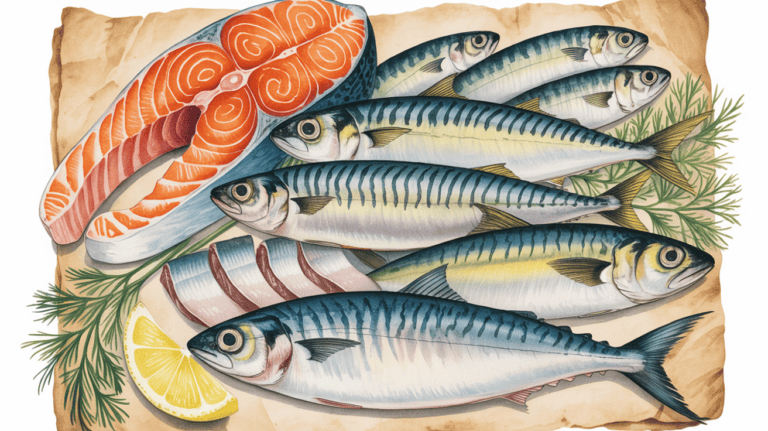
Dinner: Lemon-herb poached salmon with steamed broccoli and quinoa (moist heat, acidic marinade, omega-3 rich)
Every component of this day aligns with anti-inflammatory principles AND minimizes AGE exposure. That’s not a coincidence — the same cooking methods and food choices that reduce inflammation naturally reduce AGE formation.
For a full week of meals that follow these principles, see my 7-day anti-inflammatory meal plan.
The Bigger Picture
AGEs are one piece of the chronic inflammation puzzle — not the whole picture. But they’re a uniquely actionable piece. You can’t change your genetics or your age. You can change how you cook.
The recommendations for reducing dietary AGEs are remarkably consistent with general anti-inflammatory dietary advice: more plants, more omega-3s, more antioxidants, less ultra-processed food, and more mindful cooking methods. If you’re already working toward an anti-inflammatory diet — even using a framework like the Dietary Inflammatory Index — you’re likely reducing your AGE exposure without even trying.
And if you’re just starting out, focusing on cooking methods is one of the simplest, most impactful changes you can make. No special ingredients. No supplements. Just a shift in how heat meets food.
What’s the one cooking swap you’ll try this week?
This content is for educational purposes and is not a substitute for individualized medical advice. If you’re managing diabetes, cardiovascular disease, or another chronic condition, work with your healthcare team on a comprehensive plan. For guidance on starting that conversation, see my article on how to talk to your doctor about anti-inflammatory nutrition.
References (click to expand)
Chen, Y., et al. (2025). Advanced glycation end products in disease development and potential interventions. *Antioxidants*, 14(4), 492. [https://doi.org/10.3390/antiox14040492](https://doi.org/10.3390/antiox14040492)
Garay-Sevilla, M. E., et al. (2019). Advanced glycation end products and their role in health and disease. *Advances in Experimental Medicine and Biology*, 1128, 3-11.
Twarda-Clapa, A., et al. (2022). Advanced glycation end-products (AGEs): Formation, chemistry, classification, receptors, and diseases related to AGEs. *Cells*, 11(8), 1312. [https://doi.org/10.3390/cells11081312](https://doi.org/10.3390/cells11081312)
Uribarri, J. (2023). Dietary advanced glycation end products: Their role in the insulin resistance of aging. *Cells*, 12(13), 1819. [https://doi.org/10.3390/cells12131684](https://doi.org/10.3390/cells12131684)
Uribarri, J., et al. (2010). Advanced glycation end products in foods and a practical guide to their reduction in the diet. *Journal of the American Dietetic Association*, 110(6), 911-916.e12. [https://doi.org/10.1016/j.jada.2010.03.018](https://doi.org/10.1016/j.jada.2010.03.018)
Vlassara, H., et al. (2016). Oral AGE restriction ameliorates insulin resistance in obese individuals with the metabolic syndrome: A randomized controlled trial. *Diabetologia*, 59(10), 2181-2192. [https://doi.org/10.1007/s00125-016-4053-x](https://doi.org/10.1007/s00125-016-4053-x)