Healthy Habits That Lower Inflammation: What the Research Actually Shows
An Evidence-Based Guide from a Registered Dietitian — Because “Eat Better and Exercise” Isn’t a Real Plan
If you’ve been told you have elevated CRP, or your doctor mentioned chronic inflammation, or you’ve been reading about inflammation and how it connects to basically everything — heart disease, diabetes, autoimmune conditions, brain fog, joint pain — you’re probably wondering what you’re supposed to do about it.
The standard advice is maddening: “eat healthy, exercise more, manage stress.” Thanks. Very helpful.
Here’s what I want to give you instead: the specific habits that research has actually linked to measurable changes in inflammatory markers, in plain language, with realistic starting points. Not a complete life overhaul. Not a list of things to feel guilty about. Just the evidence — and where to begin.
Short on Time? Start With These Three Things.
- Add two servings of colorful produce to your day — berries, leafy greens, sweet potatoes, or tomatoes — and prioritize omega-3 rich foods like salmon or ground flaxseed twice a week.
- Move for 20 minutes daily — walking counts. A 2025 meta-review of 30,000+ participants found that regular exercise significantly reduces CRP and IL-6, two key inflammatory markers.
- Protect your sleep — even modest sleep disruption raises inflammatory markers. A consistent bedtime matters more than a perfect routine.
Start with these. Then come back when you’re ready.
This post may contain affiliate links to products that align with my evidence-based nutrition approach. As an Amazon Associate I earn from qualifying purchases. Full disclosure.
First: What Does “Chronic Inflammation” Actually Mean?
You probably know about the kind of inflammation you can see — a swollen ankle, a red cut healing, a sore throat. That’s acute inflammation. It arrives, does its job, and leaves. Your immune system handles the threat, cleans up, and stands down. It’s essential and healthy.
Chronic inflammation is different. It’s low-grade, systemic, and persistent. Think of it as your immune system stuck in a low hum — not loud enough to cause obvious symptoms, but active enough to cause damage over months and years.
This kind of inflammation doesn’t always announce itself with redness or swelling. It shows up as elevated CRP levels on a blood test, persistent fatigue, joint stiffness that isn’t quite arthritis, brain fog that doesn’t have a clear cause, or a constellation of symptoms that individually seem minor but together suggest something systemic is going on.
Here’s the part most people don’t hear: chronic inflammation isn’t just a side effect of disease. In many cases, it precedes and drives disease. Research consistently links chronic low-grade inflammation to cardiovascular disease, type 2 diabetes, certain cancers, neurodegenerative conditions like Alzheimer’s, autoimmune disorders, and depression (Pahwa et al., 2023).
A 2025 integrative review put it bluntly: systemic chronic inflammation is “a major contributor to many diseases and a global cause of death and disability” — and the major modifiable drivers are lifestyle factors, not genetics (Hernandez-Torres et al., 2025).
That’s the important word: modifiable. You can change this.
The Habits That Actually Move the Needle
Let me be direct: no single food, supplement, or habit eliminates chronic inflammation. But the research is clear that a combination of dietary and lifestyle changes can significantly reduce inflammatory markers — and in some cases, produce changes that rival pharmaceutical interventions.
An Anti-Inflammatory Dietary Pattern
This is the most powerful lever you have, and it doesn’t require perfection.
The evidence doesn’t point to one specific “anti-inflammatory diet.” It points to a pattern — one that shows up again and again across the Mediterranean diet, the DASH diet, plant-forward eating approaches, and traditional diets from cultures around the world. The common thread is the anti-inflammatory components these diets share.
A 2025 systematic review and meta-analysis examining anti-inflammatory dietary patterns and cardiovascular risk found that adherence to anti-inflammatory diets was consistently associated with lower CRP, improved blood lipids, and reduced blood pressure (Liu et al., 2025). A separate 2025 scoping review confirmed that multiple diet quality indexes — from the Dietary Inflammatory Index to Mediterranean Diet Scores — all converge on the same core anti-inflammatory principles (Brassard et al., 2025).
So what does this pattern look like in practice?
Foods that consistently reduce inflammation:
– Colorful fruits and vegetables — especially berries, dark leafy greens, tomatoes, beets, and cruciferous vegetables. The polyphenols and antioxidants in deeply pigmented produce directly counter inflammatory pathways.
– Omega-3 fatty acids — from fatty fish (salmon, sardines, mackerel), ground flaxseed, chia seeds, and walnuts. Omega-3s are among the most well-studied anti-inflammatory nutrients in the research literature.
– Whole grains — oats, brown rice, quinoa, barley. The fiber feeds beneficial gut bacteria, which in turn produce short-chain fatty acids that reduce systemic inflammation.
– Legumes — beans, lentils, chickpeas. High in fiber, polyphenols, and resistant starch — all of which support a less inflammatory gut environment.
– Herbs and spices — turmeric (with black pepper for absorption), ginger, rosemary, cinnamon. These aren’t just flavor additions. Curcumin in turmeric, for example, modulates the same anti-inflammatory pathways as some medications.
– Extra virgin
– Fermented foods — yogurt, kefir, kimchi, sauerkraut. These support the gut microbiome, which plays a central role in regulating systemic inflammation. I’ve written a full guide on the best fermented foods and how they support inflammation reduction.
Foods that promote inflammation when consumed regularly:
– Ultra-processed foods (the single biggest driver of dietary inflammation for most people)
– Refined carbohydrates and added sugars
– Processed meats (bacon, hot dogs, deli meats)
– Excess alcohol
– Industrial seed oils high in omega-6 fatty acids when consumed in large amounts
If you’re wondering how your current diet stacks up, the Dietary Inflammatory Index is a research tool that scores your overall dietary pattern as pro- or anti-inflammatory. It’s a useful framework for understanding where you are and where to focus.
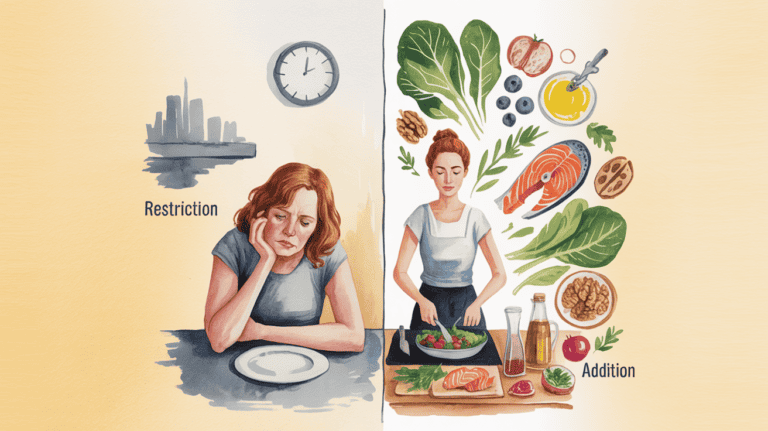
The most important shift isn’t removing foods — it’s adding them. Most people see measurable improvements in inflammatory markers by adding more produce, omega-3s, and fiber to what they’re already eating. Start by addition, not restriction.
Movement
Exercise is one of the most potent anti-inflammatory interventions available, and the evidence is now very strong.
A 2025 meta-review that pooled data from 25 systematic reviews and meta-analyses — encompassing over 30,000 participants — found that exercise significantly reduced both CRP and IL-6 levels. This held true across different types of exercise, different populations, and different health conditions (Tsoukos et al., 2025).
Here’s why this matters mechanistically: when you exercise, your muscles release anti-inflammatory compounds called myokines. These directly counteract the pro-inflammatory cytokines circulating in your body. Regular movement also reduces visceral fat — the metabolically active fat around your organs that acts as an inflammation factory.
The effective dose is lower than you might think. The research supports 150 minutes per week of moderate activity (about 20-30 minutes a day of brisk walking) combined with two resistance training sessions per week. But even less than that produces benefits. If you’re currently sedentary, a daily 10-minute walk is a meaningful starting point.
Resistance training deserves special emphasis. It preserves muscle mass, improves insulin sensitivity, and has independent anti-inflammatory effects — all of which become increasingly important after 40. If you’re navigating perimenopause or menopause, I’ve written about why this matters in my article on perimenopause as an inflammatory event.
Sleep
Sleep and inflammation have a bidirectional relationship — and it’s not forgiving.
Poor sleep raises inflammatory markers. Elevated inflammation disrupts sleep. The cycle reinforces itself. A study from UC Berkeley found that disrupted sleep was directly linked to increased inflammatory markers and atherosclerotic plaque buildup, independent of other risk factors (Vallat et al., 2023).
What the research supports:
– 7-9 hours per night is the target range for most adults
– Consistency matters more than duration — going to bed and waking up at roughly the same time regulates your circadian rhythm, which directly influences immune function
– Screens before bed genuinely matter — blue light suppresses melatonin production, and the stimulation keeps cortisol elevated
– Temperature, darkness, and quiet are non-negotiable sleep hygiene basics
If sleep is a challenge for you, it’s worth knowing that some anti-inflammatory foods directly support sleep quality. Tart cherry juice is one of the few natural dietary sources of melatonin, and the research on its sleep benefits is genuinely interesting.
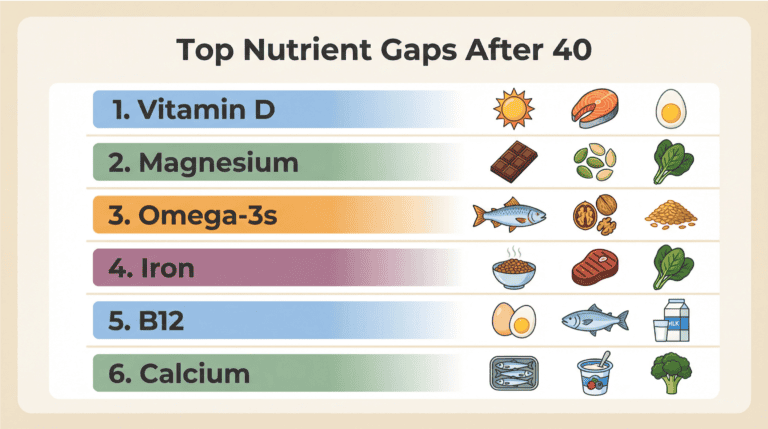
A magnesium glycinate supplement can also support both sleep quality and inflammation reduction — magnesium is involved in over 300 enzymatic reactions in the body, and many adults are deficient without knowing it.
Stress Management
Chronic psychological stress activates your hypothalamic-pituitary-adrenal (HPA) axis — your body’s stress response system — which raises cortisol. Elevated cortisol, over time, promotes inflammation. This is not a metaphor. Stress literally raises the same inflammatory markers (CRP, IL-6, TNF-α) that dietary and lifestyle changes can lower.
The challenge is that “manage your stress” is about as helpful as “eat healthy.” Here’s what the research actually supports:
- Mindfulness-based stress reduction (MBSR) — an 8-week structured program that has been shown in multiple RCTs to reduce inflammatory markers
- Regular physical activity — yes, this shows up again. Exercise simultaneously reduces stress hormones and inflammatory markers
- Social connection — loneliness and social isolation are independently associated with elevated inflammation. A meta-analysis found that perceived social isolation raises CRP, IL-6, and fibrinogen levels (Smith et al., 2020)
- Time in nature — emerging research suggests that even brief exposure to natural environments lowers cortisol and inflammatory markers
- Deep breathing practices — diaphragmatic breathing activates the vagus nerve, which has direct anti-inflammatory effects through the cholinergic anti-inflammatory pathway
You don’t have to meditate for an hour. Five minutes of slow, deep breathing while your coffee brews is a physiologically meaningful stress intervention.
Social Connection
This one surprises people, but the research is robust. Loneliness and social isolation aren’t just emotionally painful — they are biologically inflammatory.
The link between social isolation and elevated inflammatory markers has been documented repeatedly. Being socially disconnected raises your inflammatory baseline in a way that’s comparable to other recognized risk factors. This makes reaching out to a friend, joining a walking group, or showing up at a community event not just good for your mood — it’s good for your CRP levels.
Alcohol and Smoking
I’ll keep this brief because you already know it. Both alcohol and tobacco directly promote inflammation through well-established mechanisms.
For alcohol, the research supports limiting intake to no more than one drink per day — and there’s growing evidence that less is better. For smoking, cessation reduces inflammatory markers relatively quickly, with measurable changes within weeks.
What About Supplements?
Supplements can be a useful addition to an anti-inflammatory lifestyle, but they’re not a substitute for the dietary and lifestyle foundations above.
That said, a few have solid research support:
| Supplement | Evidence Level | Notes |
|---|---|---|
| Omega-3 fish oil (EPA/DHA) | Strong | Anti-inflammatory effects well-documented in multiple meta-analyses. Look for products providing at least 1,000 mg combined EPA/DHA. Nordic Naturals Ultimate Omega is a reliable option. |
| Curcumin (from turmeric) | Moderate-strong | Significant anti-inflammatory effects, but absorption is poor without piperine (black pepper extract). Doctor’s Best High Absorption Curcumin uses a patented form with improved absorption. |
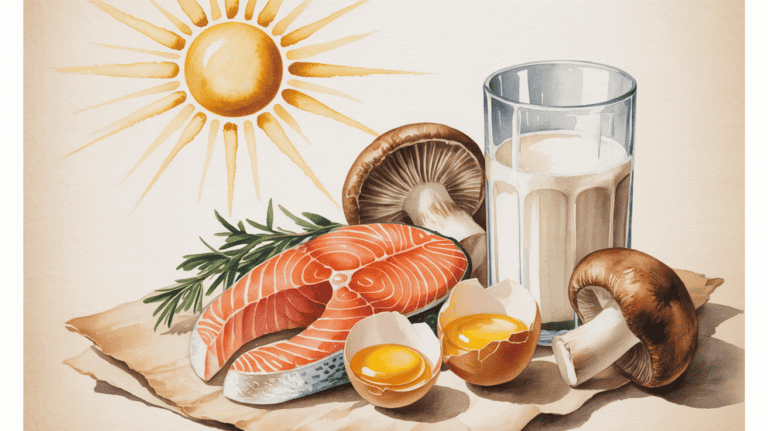
| Vitamin D | Moderate | Deficiency is associated with elevated inflammation, especially in women over 40. Get your levels tested. Most people benefit from 1,000-2,000 IU daily. |
| Magnesium | Moderate | Involved in hundreds of enzymatic reactions including inflammation regulation. Magnesium glycinate is well-absorbed and less likely to cause GI issues. |
| Probiotics | Emerging | Gut microbiome health directly influences systemic inflammation. Look for multi-strain formulas with at least 10 billion CFU. |
Always discuss supplements with your healthcare provider, especially if you’re taking medications. I have a guide on how to have that conversation with your doctor if you need a starting point.
How Do You Know It’s Working?
This is important, because changes in inflammation aren’t always visible. Here’s how to track progress:
Lab markers to discuss with your doctor:
– High-sensitivity CRP (hs-CRP) — the most commonly used marker for systemic inflammation. Optimal is below 1.0 mg/L.
– Fasting insulin — elevated insulin is both a cause and consequence of chronic inflammation
– IL-6 — a pro-inflammatory cytokine that your doctor can order if they’re willing to look deeper
What you might feel:
– Improved energy and reduced fatigue (often the first thing people notice)
– Less joint stiffness, especially in the morning
– Better sleep quality
– Clearer thinking
– More stable mood
Changes aren’t instant. Most research studies measuring dietary interventions and inflammatory markers show significant improvements at the 8-12 week mark. Give yourself at least two months of consistent changes before evaluating.
Where to Start (Realistically)
If everything above feels like too much, here’s what I’d suggest:
Week 1-2: Add one extra serving of colorful produce to your day. Switch to extra virgin
Week 3-4: Add ground flaxseed or fatty fish twice a week. Start a consistent bedtime. Consider a vitamin D and magnesium supplement.
Month 2: Begin to reduce ultra-processed foods — not by restriction, but by replacing them with the foods you’ve been adding. Try a 7-day anti-inflammatory meal plan for structure if that helps.
Month 3: Request hs-CRP testing from your doctor to see where you stand. If you’re curious about your overall dietary pattern, explore the Dietary Inflammatory Index to see how your current habits score.
You don’t have to do everything at once. Research on lifestyle interventions shows that even modest, incremental changes produce measurable reductions in inflammation. A 2024 study found that for every point of improvement in a combined lifestyle score, pro-inflammatory cytokines decreased significantly within just two months (Zou et al., 2024).
You Have More Power Here Than You’ve Been Told
If you walked away from a doctor’s appointment feeling like “your labs are normal” even though you feel anything but normal — or if you’ve been told chronic inflammation is just part of aging — I want you to know: the evidence does not support that conclusion.
The research is clear: the foods you eat, the way you move, how you sleep, and how you manage stress have a direct, measurable impact on the inflammatory processes driving so many chronic conditions. This isn’t wishful thinking. It’s biochemistry.
You’re not looking for a miracle. You’re looking for a place to start. And the fact that you made it to the end of this article tells me you already have.
What’s the one thing you’ll try this week?
This content is for educational purposes and is not a substitute for individualized medical advice. If you’re managing a chronic condition, work with your healthcare team to develop a comprehensive plan. Need help starting that conversation? I have a full guide on how to talk to your doctor about anti-inflammatory nutrition.
References (click to expand)
Brassard, D., et al. (2025). Food-based indexes and their association with dietary inflammation: A systematic scoping review. *Nutrition*, 112733. [https://doi.org/10.1016/j.nut.2025.112733](https://doi.org/10.1016/j.nut.2025.112733)
Hernandez-Torres, C., et al. (2025). Systemic chronic inflammation: Integrative strategies for health improvement and prevention of inflammatory receptor overexpression. *Medical Sciences*, 4(1), 5. [https://doi.org/10.3390/medsci4010005](https://doi.org/10.3390/medsci4010005)
Liu, Y., et al. (2025). Impact of anti-inflammatory diets on cardiovascular disease risk factors: A systematic review and meta-analysis. *Frontiers in Nutrition*, 12, 1549831. [https://doi.org/10.3389/fnut.2025.1549831](https://doi.org/10.3389/fnut.2025.1549831)
Pahwa, R., Goyal, A., & Jialal, I. (2023). Chronic inflammation. In *StatPearls*. StatPearls Publishing. [https://www.ncbi.nlm.nih.gov/books/NBK493173/](https://www.ncbi.nlm.nih.gov/books/NBK493173/)
Smith, K. J., et al. (2020). The association between loneliness, social isolation, and inflammation: A systematic review and meta-analysis. *Neuroscience & Biobehavioral Reviews*, 112, 519-541. [https://doi.org/10.1016/j.neubiorev.2020.02.002](https://doi.org/10.1016/j.neubiorev.2020.02.002)
Tsoukos, A., et al. (2025). The impact of exercise on chronic systemic inflammation: A systematic review and meta-meta-analysis. *Sport Sciences for Health*. [https://doi.org/10.1007/s11332-025-01445-3](https://doi.org/10.1007/s11332-025-01445-3)
Vallat, R., et al. (2023). Broken sleep predicts hardened blood vessels. *PLoS Biology*, 21(6), e3002178. [https://doi.org/10.1371/journal.pbio.3002178](https://doi.org/10.1371/journal.pbio.3002178)
Zou, H., et al. (2024). Lifestyle deterioration linked to elevated inflammatory cytokines over a two-month follow-up. *Scientific Reports*, 14, 21152. [https://doi.org/10.1038/s41598-024-69967-3](https://doi.org/10.1038/s41598-024-69967-3)