Vitamin D and Inflammation: What the Research Actually Shows
A Registered Dietitian’s Evidence-Based Guide to Vitamin D and Inflammatory Health
If you’ve been told your vitamin D is low — or you’ve seen headlines claiming vitamin D can help with everything from joint pain to autoimmune disease — you’re probably wondering what to believe.
Here’s the short answer: vitamin D does play a meaningful role in inflammation. But the full picture is more nuanced than most articles make it sound. Some of the research is genuinely exciting. Some of it is overhyped. And knowing the difference matters — especially if you’re managing an inflammatory condition and trying to make smart decisions about supplements.
This is the part your doctor probably didn’t have time to explain. So let’s go through it together.
Short on Time? Do These Three Things First.
1. Ask your doctor for a 25(OH)D blood test to know your actual level — not a guess.
2. If you’re deficient (below 20 ng/mL) or insufficient (20–30 ng/mL), start with 1,000–2,000 IU of vitamin D3 daily with a meal that contains fat.
3. Add vitamin D–rich foods like fatty fish, eggs, and fortified foods while you wait for your levels to improve.
Start with these. Then come back when you’re ready.
This post may contain affiliate links to products that align with my evidence-based nutrition approach. As an Amazon Associate I earn from qualifying purchases. Full disclosure.
How Common Is Vitamin D Deficiency — and Could It Be Affecting You?
More common than you’d expect. A comprehensive analysis of U.S. National Health and Nutrition Examination Survey (NHANES) data from 2001–2018 found that roughly 25% of American adults are moderately deficient in vitamin D, with another 41% falling in the insufficient range (Cui et al., 2023). That means nearly two-thirds of American adults don’t have optimal vitamin D levels.
And deficiency isn’t distributed equally. The same analysis found that risk is significantly higher in women, non-Hispanic Black Americans, people in their 20s–50s, those tested during winter months, people with higher body weight, and those with lower incomes (Cui et al., 2023).
So if you’re a woman over 40 dealing with inflammatory symptoms and you haven’t had your levels checked recently — it’s worth asking. I walk through how to have that conversation in my guide on how to talk to your doctor about anti-inflammatory nutrition.
**Worth remembering:** The Linus Pauling Institute at Oregon State University reports that more than 94% of the U.S. population doesn’t meet the daily requirement for vitamin D from food alone. Supplementation is often necessary — but the right dose depends on your current blood levels.
What Vitamin D Actually Does in Your Immune System
Here’s what makes vitamin D unique among nutrients: almost every immune cell in your body has a vitamin D receptor. That means vitamin D isn’t just floating around passively — it’s actively involved in how your immune system responds to threats.
Think of it this way. Your immune system has two jobs: fight things that shouldn’t be there (infections, damaged cells) and stop fighting when the threat is gone. Vitamin D helps with both sides of that equation.
Specifically, vitamin D helps regulate the production of inflammatory chemicals called cytokines — particularly TNF-α and IL-6 (two of the biggest drivers of chronic inflammation) and IL-10 (which calms inflammation down). When vitamin D levels are adequate, your immune system is better at maintaining that balance. When levels drop, the inflammatory side tends to dominate (Hysa et al., 2024).
This is also why vitamin D keeps showing up in research on conditions driven by chronic inflammation — from autoimmune diseases to cardiovascular issues to metabolic health.
The VITAL Trial: The Study That Changed Everything
If there’s one study that put vitamin D and inflammation on the map, it’s the VITAL trial. This was massive — over 25,800 adults aged 50 and older, followed for more than five years.
The headline finding: participants who took 2,000 IU of vitamin D3 daily had a 22% reduction in new autoimmune disease diagnoses compared to the placebo group. That includes conditions like rheumatoid arthritis, polymyalgia rheumatica, autoimmune thyroid disease, psoriasis, and inflammatory bowel disease (Hahn et al., 2022).
And when researchers looked specifically at the last three years of the trial — after participants had been taking vitamin D for at least two years — the effect was even stronger, with a 39% reduction in confirmed autoimmune disease.
This is a genuinely significant finding. It’s the first large-scale randomized trial to show that a simple, inexpensive supplement could meaningfully reduce the risk of developing autoimmune conditions in older adults.
That said, it’s important to note this was a prevention study — it looked at whether vitamin D could prevent new autoimmune diagnoses, not whether it could treat existing ones. Those are different questions, and the research on treatment is more mixed.
What the Evidence Shows for Specific Conditions
Type 2 Diabetes and Metabolic Inflammation
For people managing type 2 diabetes, there’s encouraging evidence. A systematic review and meta-analysis found that vitamin D supplementation reduced markers of chronic low-grade inflammation in patients with type 2 diabetes, including improvements in CRP and other inflammatory markers (Mousa et al., 2018). This matters because the inflammation that accompanies type 2 diabetes contributes to insulin resistance and complications over time.
If you’re managing blood sugar alongside inflammation, I cover more strategies in my article on healthy habits that lower inflammation.
Rheumatoid Arthritis
A 2024 meta-analysis specifically examined vitamin D supplementation in people with rheumatoid arthritis and found effects on some inflammatory markers, though the results varied depending on the dose and study design (Al-Saoodi et al., 2024). The researchers noted that vitamin D deficiency is common in people with RA, and that correcting deficiency may support disease management — but that vitamin D alone isn’t a replacement for standard treatment.
For a deeper look at dietary strategies for RA, see my complete guide to anti-inflammatory diet for rheumatoid arthritis.
Asthma and Respiratory Inflammation
Honesty moment — the evidence here is more mixed than you might expect. A 2024 systematic review of randomized controlled trials found that vitamin D supplementation in people with asthma did not reduce most markers of type 2 inflammation (the kind that drives allergic asthma). However, it did significantly increase levels of IL-10, the anti-inflammatory cytokine (El Abd et al., 2024). So there may be some immune-modulating benefit, but it’s not the straightforward anti-inflammatory effect many people hope for.
Overweight and Obesity — Without Other Conditions
Here’s where I want to be especially honest: a 2024 meta-analysis specifically looked at whether vitamin D supplementation reduced inflammatory markers (CRP, IL-6, TNF-α) in people who were overweight or obese but didn’t have other conditions like diabetes or autoimmune disease. The result? No significant effect on inflammation (Gouveia et al., 2024).
This doesn’t mean vitamin D is unimportant for people in larger bodies — deficiency is more common with higher body weight, and correcting deficiency still matters for bone health, immune function, and overall wellbeing. But it does mean that vitamin D supplements alone won’t necessarily lower your inflammatory markers if your only risk factor is body weight.
How Much Vitamin D Do You Actually Need?
This depends on where you’re starting. Here’s a practical framework:
| Your Current Level | What It Means | Practical Next Step |
|---|---|---|
| Below 20 ng/mL (50 nmol/L) | Deficient — increased health risks | Talk to your doctor about a loading dose; 2,000–4,000 IU/day may be needed |
| 20–30 ng/mL (50–75 nmol/L) | Insufficient — room for improvement | 1,000–2,000 IU/day is a reasonable starting point |
| 30–50 ng/mL (75–125 nmol/L) | Adequate for most people | Maintenance dose of 600–1,000 IU/day |
| Above 50 ng/mL (125 nmol/L) | Sufficient — no increase needed | Continue food sources; supplement only if needed seasonally |
The Institute of Medicine recommends 600 IU/day for adults under 70 and 800 IU/day for adults over 70. But many researchers and clinicians now consider these minimums rather than targets, particularly for people managing inflammatory conditions. The Endocrine Society suggests higher doses — up to 1,500–2,000 IU/day — to maintain optimal levels.
The upper tolerable limit is 4,000 IU/day for adults, though some people under medical supervision may temporarily need more to correct a deficiency. Going significantly above this without monitoring can lead to vitamin D toxicity, which causes calcium buildup and can affect your kidneys and heart. More is not always better.
Key absorption tip
Vitamin D is fat-soluble, which means your body absorbs it significantly better when you take it with a meal that includes some fat. A few eggs with avocado, a handful of nuts, or salmon with
The Best Food Sources of Vitamin D
While supplementation is often necessary to correct deficiency, food sources of vitamin D still matter — both for baseline intake and because whole foods deliver vitamin D alongside other anti-inflammatory nutrients.
| Food | Vitamin D per Serving | Bonus Anti-Inflammatory Nutrients |
|---|---|---|
| Wild salmon (3 oz) | 570–700 IU | Omega-3 fatty acids, astaxanthin |
| Sardines (3.75 oz can) | 175–250 IU | Omega-3s, calcium, selenium |
| Egg yolks (2 large) | 80–90 IU | Choline, lutein |
| Fortified milk or plant milk (1 cup) | 100–120 IU | Calcium, often B12 |
| UV-exposed mushrooms (½ cup) | 350–400 IU | Beta-glucans, selenium |
| Cod liver oil (1 tsp) | 450 IU | Omega-3s, vitamin A |
You’ll notice that several of the best vitamin D sources — salmon, sardines, eggs — are also foods that show up on anti-inflammatory food lists for other reasons. That’s not a coincidence. When you focus on whole, nutrient-dense foods, you’re often addressing multiple inflammatory pathways at once.
For a deeper dive into the best fish choices and how to navigate mercury concerns, see my guide to the best fish for inflammation.
Supplements: What to Look For
If you’re supplementing, here’s what I recommend:
Vitamin D3 (cholecalciferol) is the preferred form — it’s the same type your skin produces from sunlight and is more effective at raising blood levels than D2.
Good: Nature Made Vitamin D3 2000 IU
This is a simple, reliable vitamin D3 supplement that gets the job done without unnecessary extras. The 2,000 IU dose is a common starting point for adults who are deficient or insufficient and trying to bring their vitamin D levels into the optimal range.

Why I recommend it: Affordable, widely available, and backed by USP third-party verification, which is one of the most rigorous quality checks in the supplement industry and means it has been independently tested to confirm its potency, purity, and ingredient quality. .
Best for: People who want a straightforward, budget-friendly vitamin D3 supplement to help correct low levels.
Better: AlgaeCal Plus
This formula pairs vitamin D3 with magnesium, vitamin K2 (MK-7), boron, and plant-based calcium, nutrients that help support the metabolic pathways vitamin D relies on. Magnesium helps activate vitamin D in the body, while vitamin K2 helps guide calcium into bones rather than soft tissues. The marine algae–derived calcium also provides a range of naturally occurring trace minerals that support bone strength and overall nutrient balance.
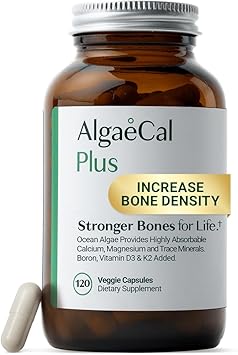
Why I recommend it: It provides vitamin D alongside the key companion nutrients that help it function properly, rather than relying on vitamin D alone.
Best for: People who want a more comprehensive nutrient formula supporting inflammation balance, bone health, and immune function in one supplement.
Best: Nordic Naturals Ultimate Omega-D3
This supplement combines vitamin D3 with high-quality omega-3 fatty acids (EPA and DHA), two nutrients that both play roles in regulating inflammation. Each serving provides 1,000 IU of vitamin D3 plus 1,280 mg of omega-3s, making it a convenient option if you’re trying to support inflammatory health from multiple angles. Nordic Naturals is widely known for third-party testing, purity standards, and sustainably sourced fish oil, and the lemon-flavored softgels tend to be easier to tolerate than many fish oil supplements.

Why I recommend it: You get vitamin D plus clinically relevant omega-3s in one supplement, which can simplify your routine if you’re already considering both nutrients for inflammatory support.
Best for: People who want a combined vitamin D and omega-3 supplement rather than taking multiple pills.
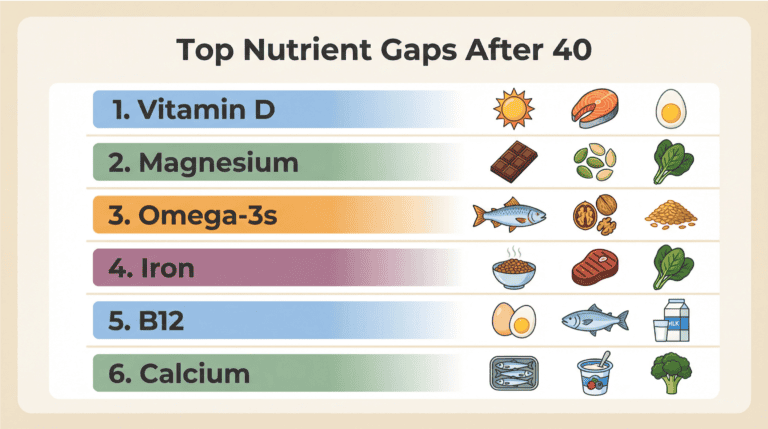
I also cover vitamin D as part of the broader nutrient picture in my article on nutrient deficiencies in women over 40.
What About Sunlight?
Sunlight is how your body was designed to make vitamin D. When UVB rays hit your skin, your body converts a cholesterol compound into vitamin D3. It’s remarkably efficient — 10 to 30 minutes of midday sun exposure on your arms and face can produce 10,000–20,000 IU of vitamin D, depending on your skin tone, latitude, and the season.
But here’s the practical reality: if you live above the 37th parallel (roughly north of a line from San Francisco to Richmond, Virginia), your skin can’t make meaningful vitamin D from sunlight during the winter months — the sun angle is simply too low. Add sunscreen use, indoor lifestyles, and the fact that vitamin D production from sun decreases with age, and you can see why supplementation often fills a necessary gap.
Sunlight remains valuable — and not just for vitamin D. Morning light exposure supports your circadian rhythm, mood, and sleep quality. I wouldn’t skip it. But I also wouldn’t rely on it as your only vitamin D strategy.
The Bottom Line: What This Means for You
Vitamin D isn’t a miracle anti-inflammatory supplement. But it’s also not just about bones.
The evidence is strongest that vitamin D plays a genuine role in immune regulation, and that deficiency contributes to increased inflammation — particularly in people with autoimmune conditions, type 2 diabetes, and those at risk for autoimmune disease. The VITAL trial’s 22% reduction in autoimmune disease risk with just 2,000 IU daily is hard to ignore.
What the evidence does not support is the idea that taking vitamin D will dramatically reduce inflammation in everyone, regardless of their current levels or health status. If your levels are already adequate, more vitamin D probably won’t move the needle on your inflammatory markers.
The practical takeaway: Get tested. Know your level. Correct deficiency if it exists. Eat vitamin D–rich foods that also deliver anti-inflammatory benefits. And don’t expect vitamin D alone to do the work of a full anti-inflammatory eating pattern — but do recognize it as an important piece of the puzzle.
You’re not crazy for wondering if something as simple as a vitamin could matter here. It can. And now you know exactly how much — and where the limits are.
What’s the one thing you’ll try this week?
This post is for informational purposes only and is not a substitute for professional medical advice, diagnosis, or treatment. If you’re managing an inflammatory condition, work with your healthcare provider to determine the right vitamin D strategy for you. For help navigating that conversation, see my guide on how to talk to your doctor about anti-inflammatory nutrition.