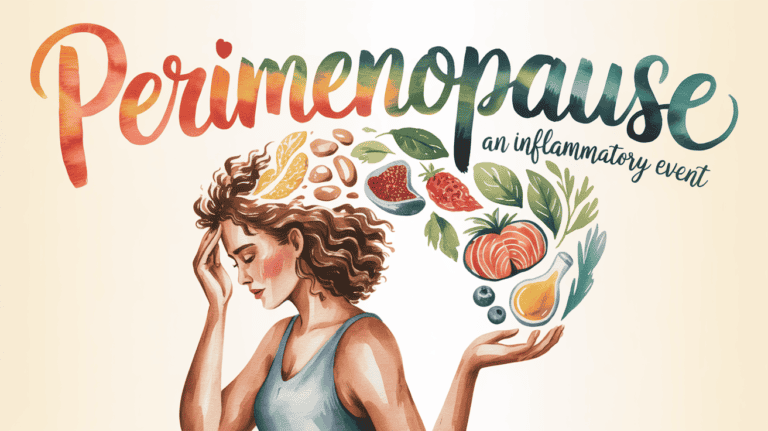
Metabolism After 40: What’s Actually Changing (and the Anti-Inflammatory Habits That Help)
A Registered Dietitian’s Evidence-Based Guide to Metabolic Health in Midlife
If you feel like your metabolism “broke” sometime in your 40s — like the rules that used to work just stopped working — you’re not imagining things. But the explanation is probably different from what you’ve been told.
The mainstream narrative is simple: metabolism slows with age, so eat less and exercise more. But the reality is more nuanced, more interesting, and honestly, more empowering. Because what’s changing isn’t just your metabolic rate — it’s the inflammatory environment inside your body, the way your hormones regulate fat storage and insulin sensitivity, and how your body processes fuel at every level.
Understanding what’s actually happening changes what you actually do about it. And spoiler: the answer isn’t another restrictive diet.
Short on Time? Do These Three Things First.
1. Prioritize protein at every meal (aim for 25–30g) — this supports muscle preservation, which is the single biggest factor in metabolic rate.
2. Add anti-inflammatory foods daily (berries, leafy greens, fatty fish,
olive oil ) — inflammation directly impairs insulin sensitivity and fat metabolism.3. Include resistance exercise 2–3 times per week — even bodyweight exercises protect the muscle mass that drives your metabolism.
Start with these. Then come back when you’re ready.
This post may contain affiliate links to products that align with my evidence-based nutrition approach. As an Amazon Associate I earn from qualifying purchases. Full disclosure.
The Metabolism Myth That Needs to Die
Here’s something that might surprise you: a landmark 2021 study published in Science — analyzing data from over 6,400 people — found that basal metabolic rate (the calories you burn at rest) actually remains remarkably stable between ages 20 and 60. The dramatic decline most people associate with aging doesn’t really kick in until after 60.
So if your metabolism hasn’t “crashed,” why does everything feel different?
The answer lies in three interconnected changes that converge during midlife — and all of them involve inflammation.
What’s Really Changing: The Metabolic Trifecta
1. Body Composition Shifts
Starting in your 30s (and accelerating in your 40s), you gradually lose muscle mass — a process called sarcopenia — at a rate of about 3–8% per decade. Muscle is metabolically active tissue; it burns more calories at rest than fat does. So even if your metabolic rate per kilogram of muscle hasn’t changed, losing muscle reduces your overall daily calorie burn.
During perimenopause, this shift accelerates. Declining estrogen promotes a redistribution of body fat from the hips and thighs to the abdomen. This visceral fat (the deep belly fat that wraps around your organs) isn’t just cosmetically different — it’s metabolically different. Visceral fat is essentially an inflammatory organ, actively secreting pro-inflammatory compounds like TNF-α, IL-6, and leptin into your bloodstream.
A 2021 study in Scientific Reports found that postmenopausal women showed significantly more visceral fat-related inflammation — including immune cell infiltration and increased inflammatory cytokine expression — compared to premenopausal women, even at similar body weights (adipose tissue phenotype study, 2021). This inflammation worsens insulin resistance, which further promotes fat storage. It’s a cycle.
2. Insulin Resistance and Inflammation
Insulin resistance — when your cells become less responsive to insulin’s signal to absorb glucose — is one of the most significant metabolic changes in midlife. And it’s directly driven by inflammation.
A 2024 review in Gynecological and Reproductive Endocrinology & Metabolism confirmed that menopausal estrogen decline disrupts insulin sensitivity through multiple mechanisms: reduced insulin receptor signaling, increased visceral fat deposition (which releases inflammatory adipokines), and decreased SHBG (sex hormone-binding globulin) leading to higher free testosterone and greater androgenicity (Genazzani et al., 2024).
The ZOE PREDICT study — one of the most comprehensive metabolic research projects ever conducted — found that postmenopausal women had 6% higher fasting glucose, 5% higher HbA1c, and 4% higher inflammatory markers (GlycA) compared to premenopausal women, along with significantly worse postprandial glucose responses (Berry et al., 2022). The study also found that diet and gut bacterial species partially mediated the relationship between menopause and these metabolic changes — suggesting that what you eat can meaningfully influence the trajectory.
3. The Inflammatory Cascade
Here’s where it all comes together. Declining estrogen reduces its anti-inflammatory protection. Visceral fat increases inflammatory output. Insulin resistance worsens, which promotes more visceral fat storage. Poor sleep (common in perimenopause) raises cortisol, which further impairs insulin sensitivity and promotes abdominal fat deposition. And elevated cortisol and inflammation both disrupt appetite-regulating hormones.
This isn’t a metabolism problem. It’s an inflammation problem with metabolic consequences.
Why Anti-Inflammatory Eating Changes the Game
If inflammation is driving metabolic disruption, then calming inflammation isn’t just about feeling better — it directly improves the metabolic processes that feel “broken.” Anti-inflammatory dietary patterns improve insulin sensitivity, reduce visceral fat accumulation, and support the hormonal environment your metabolism needs.
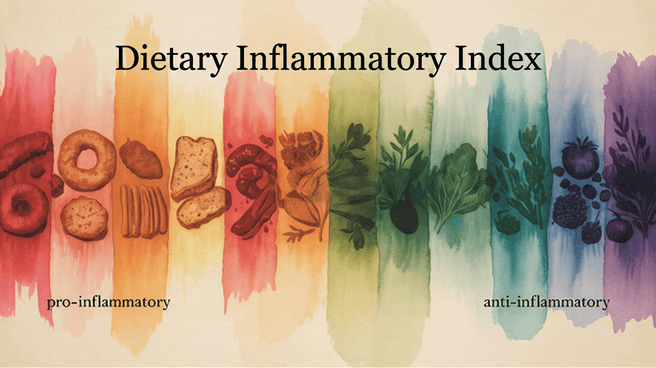
This is why I frame everything through the lens of inflammation rather than calories. As I explain in my article on the Dietary Inflammatory Index, the overall inflammatory quality of your diet is one of the strongest predictors of metabolic health — independent of calorie intake.
The practical priorities for metabolic support in midlife:
Protein is the foundation. Adequate protein intake preserves muscle mass, supports satiety, and has the highest thermic effect of any macronutrient (meaning your body burns more energy digesting it). Aim for 25–30g of protein at each meal, and consider adding ground flaxseed for its additional anti-inflammatory and hormonal benefits.
Anti-inflammatory fats —
Fiber-rich foods — vegetables, legumes, whole grains, berries — feed the beneficial gut bacteria that produce short-chain fatty acids, which improve insulin sensitivity and reduce systemic inflammation. The gut-metabolism connection is powerful, and I explore it more in my article on the gut-brain connection.
Fermented foods — yogurt, kefir, kimchi, sauerkraut — support gut microbial diversity, which the ZOE PREDICT study identified as a mediator of menopausal metabolic changes. I have a full guide to the best fermented foods if you want to learn more.
What you don’t need: Extreme calorie restriction, which actually backfires in midlife. Severe calorie cutting increases cortisol, accelerates muscle loss, worsens inflammatory markers, and can disrupt thyroid function. This is the opposite of what your metabolism needs right now.
The Exercise Component
Resistance training is the most powerful metabolic intervention available to women in midlife. Preserving (and building) muscle mass directly maintains your metabolic rate, improves insulin sensitivity, and reduces visceral fat. This doesn’t require a gym membership or heavy weights — bodyweight exercises, resistance bands, and functional movements all count.
The combination of resistance training and adequate protein is genuinely more effective for metabolic health than cardio alone. That said, regular walking, swimming, or other aerobic movement also reduces inflammatory markers and improves cardiovascular metabolic health.
A Practical Framework for Metabolic Health After 40
| Priority | What to Do | Why It Matters |
|---|---|---|
| Protein at every meal | 25–30g (eggs, fish, poultry, legumes, Greek yogurt) | Preserves muscle, supports satiety, highest thermic effect |
| Anti-inflammatory foods daily | Berries, leafy greens, |
Reduces the inflammation driving insulin resistance |
| Resistance exercise 2–3x/week | Bodyweight, bands, or weights | Maintains metabolic rate through muscle preservation |
| Sleep 7–8 hours | Prioritize sleep hygiene and consistent bedtime | Poor sleep raises cortisol and worsens insulin sensitivity |
| Manage stress | Daily stress-reducing practice, even 5 minutes | Chronic cortisol promotes visceral fat storage |
| Fiber and fermented foods | Legumes, vegetables, yogurt, kimchi | Supports gut health, which mediates metabolic function |
For a week of meals built around these principles, see my 7-day anti-inflammatory meal plan.
The Mindset Shift
Here’s what I want you to take away: your metabolism didn’t break. Your body is navigating a complex hormonal and inflammatory transition, and it needs different support than it did at 30. The goal isn’t to eat less — it’s to eat in a way that calms inflammation, preserves muscle, and supports insulin sensitivity.
This is why I focus on nutrition by addition, not restriction. Add protein. Add anti-inflammatory foods. Add movement. Add sleep. The improvements compound.
You’re not failing. Your body isn’t betraying you. It’s responding to specific biological changes — and there are specific, evidence-based things you can do about them. For a broader look at how anti-inflammatory habits work together, see my article on healthy habits that lower inflammation.
What’s the one habit you’ll start with this week?
This information is for educational purposes and is not a substitute for personalized medical advice. If you have concerns about metabolic changes, insulin resistance, or unexplained weight changes, talk with your healthcare provider. For guidance on that conversation, see my article on how to talk to your doctor about anti-inflammatory nutrition for menopause.
References (click to expand)
Pontzer, H., Yamada, Y., Sagayama, H., et al. (2021). Daily energy expenditure through the human life course. *Science*, 373(6556), 808–812. https://doi.org/10.1126/science.abe5017
Genazzani, A. D., Petrillo, T., Semprini, E., et al. (2024). Metabolic syndrome, insulin resistance and menopause: The changes in body structure and the therapeutic approach. *Gynecological and Reproductive Endocrinology & Metabolism*, 4(2/2023), 086–091. https://doi.org/10.53260/grem.234026
Berry, S. E., Valdes, A. M., Drew, D. A., et al. (2022). Menopause is associated with postprandial metabolism, metabolic health and lifestyle: The ZOE PREDICT study. *eBioMedicine*, 85, 104303. https://doi.org/10.1016/j.ebiom.2022.104303
Kverneland, A., et al. (2021). Changes in abdominal subcutaneous adipose tissue phenotype following menopause is associated with increased visceral fat mass. *Scientific Reports*, 11, 14750. https://doi.org/10.1038/s41598-021-94189-2
Metabolic disorders in menopause. (2015). *Menopausal Review*, 14(1), 59–64. https://doi.org/10.5114/pm.2015.49180
Al-Goblan, A., & Agrawal, P. (2025). Intermittent fasting and weight management at menopause. *Journal of Midlife Health*, 16(1), 14–18. https://doi.org/10.4103/jmh.jmh_227_24