Anti-Inflammatory Foods for Mood: What the Research Says About Nutrition and Mental Health
A Registered Dietitian’s Evidence-Based Guide to the Food-Mood Connection
When you’re deep in a low mood — exhausted, foggy, irritable for no clear reason — the last thing you want to hear is “have you tried eating better?” It sounds dismissive. Simplistic. Like someone suggesting a salad could fix something that feels much bigger than food.
But here’s what I want you to know: the research connecting what you eat to how you feel has gotten remarkably strong in the last few years. And it’s not about willpower or “eating clean.” It’s about inflammation — and the specific foods that either fuel it or calm it down.
If you’ve been experiencing mood changes alongside other symptoms — fatigue, joint pain, brain fog, digestive issues — this isn’t a coincidence. Inflammation connects all of these, and addressing it through nutrition is one of the most evidence-based strategies available. You’re not looking for a mood hack. You’re looking for an explanation. This is it.
Short on Time? Do These Three Things First.
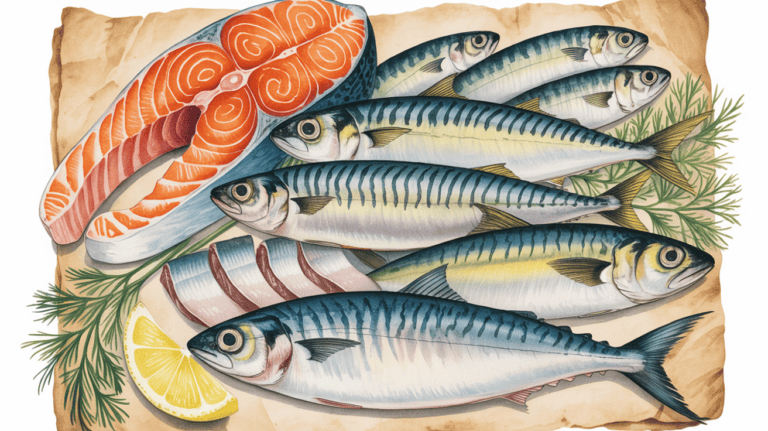
1. Add fatty fish (salmon, sardines, mackerel) to your meals twice a week — omega-3s have the strongest evidence for mood support
2. Eat one serving of fermented food daily — your gut bacteria directly produce mood-regulating neurotransmitters
3. Include colorful berries and leafy greens most days — their polyphenols reduce the neuroinflammation linked to low mood
Start with these. Then come back when you’re ready.
This post may contain affiliate links to products that align with my evidence-based nutrition approach. As an Amazon Associate I earn from qualifying purchases. Full disclosure.
The Inflammation-Mood Connection Is Stronger Than You Think
People with depression consistently show higher levels of inflammatory markers — including C-reactive protein (CRP), interleukin-6 (IL-6), and tumor necrosis factor-alpha (TNF-α). This isn’t new information. But what has changed is our understanding of direction: inflammation doesn’t just accompany depression. In many cases, it appears to contribute to it.
Inflammatory molecules can cross the blood-brain barrier and disrupt neurotransmitter production — the same chemicals (serotonin, dopamine, GABA) that regulate your mood, motivation, and sense of calm. When inflammation is elevated, your brain’s ability to produce and use these chemicals effectively can be impaired.
This matters enormously for women in midlife, because perimenopause and menopause are inherently inflammatory transitions. As I explain in my article on why perimenopause is an inflammatory event, declining estrogen triggers measurable increases in systemic inflammation — which helps explain why mood disturbances are so common during this time and why they often don’t respond fully to conventional approaches alone.
The Mediterranean Diet: The Strongest Evidence We Have
When it comes to food and mood, one dietary pattern stands above the rest in research quality and consistency: the Mediterranean diet.
A 2025 meta-analysis of randomized controlled trials found that Mediterranean diet interventions significantly alleviated depressive symptoms in adults with depression — and the improvements were meaningful, not marginal (Bizzozero-Peroni et al., 2025).
This builds on one of the landmark studies in this field: the SMILES trial, which randomized people with moderate-to-severe depression to either a modified Mediterranean diet with dietitian support or a social support control group. After 12 weeks, 32% of the diet group achieved full remission of their depression — compared to just 8% in the control group. The more participants improved their diet, the more their symptoms improved.
A 2025 systematic review of RCTs across the lifespan confirmed these findings, reporting that Mediterranean-style diets reduced depressive symptoms by 32–45% across multiple trials. The mechanisms are clear: these diets are rich in polyphenols, omega-3 fatty acids, and fiber; they lower systemic inflammation; they promote gut microbial diversity; and they provide the raw materials your brain needs to produce mood-regulating neurotransmitters (Dietary Patterns and Mental Health, 2025).
So what does this actually mean for you? You don’t need to “go Mediterranean.” You need the anti-inflammatory principles that make this diet work — and they’re more accessible than you might think.
The Anti-Inflammatory Nutrients That Support Your Mood
Researchers have identified twelve nutrients with the strongest evidence for what they call “antidepressant” roles in the body. These include folate, iron, omega-3 fatty acids (EPA and DHA), magnesium, potassium, selenium, thiamine, vitamin A, vitamin B6, vitamin B12, vitamin C, and zinc.
Notice what these have in common: they’re all abundant in an anti-inflammatory dietary pattern. Here’s how the most impactful ones work.
Omega-3 fatty acids (EPA and DHA) have the strongest individual evidence for mood support. EPA in particular appears to reduce neuroinflammation — the brain-specific inflammation that disrupts neurotransmitter function. The best food sources are fatty fish: salmon, sardines, mackerel, and herring. Aim for two servings per week. If that’s challenging, a quality supplement like Nordic Naturals Ultimate Omega can help bridge the gap.
Magnesium is involved in over 300 enzymatic reactions, including those that regulate your nervous system. Low magnesium is associated with increased inflammation, anxiety, and sleep disruption — and deficiency is remarkably common in women over 40. Dark leafy greens, nuts, seeds, and dark chocolate are excellent sources. Supplementing with magnesium glycinate — which is well-absorbed and gentle on the stomach — is worth considering if you’re not consistently getting enough from food.
B vitamins — particularly B6, B12, and folate — are essential for neurotransmitter production. Your body needs B6 to make serotonin and GABA. It needs B12 and folate for methylation, a process critical to brain function. Deficiency in any of these can look a lot like depression: fatigue, cognitive difficulties, irritability. Good sources include eggs, fish, poultry, leafy greens, legumes, and fortified foods.
Vitamin D plays a role in serotonin synthesis and immune regulation. Deficiency is epidemic, particularly in women over 40, and is associated with increased risk of depression. Ask your doctor to check your levels — optimal is generally 40–60 ng/mL, higher than the “adequate” cutoff of 30.
Gut Health: The Missing Piece in the Mood Puzzle
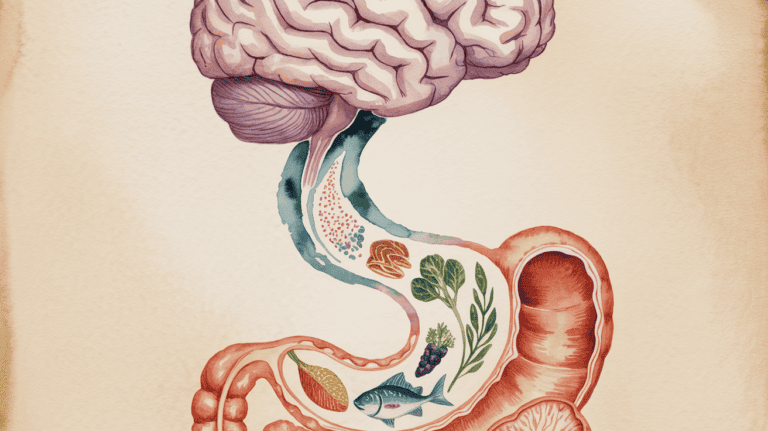
About 90% of your serotonin receptors are in your gut, not your brain. Your gut microbes produce neurotransmitters, modulate inflammation, and communicate directly with your brain through the vagus nerve. If your gut ecosystem is disrupted, your mood can be, too.
This is why fermented foods appear repeatedly in the research on mood and mental health. Foods like yogurt, kefir, sauerkraut, kimchi, and miso introduce beneficial bacteria that support microbial diversity — and a diverse microbiome is consistently associated with lower inflammation and better mental health outcomes.
I dive deeply into this relationship in my guide on the gut-brain connection and my article on the best fermented foods for menopause. The gut-brain-mood connection is one of the most exciting areas in nutrition science, and the practical applications are straightforward.
For women interested in how specific gut bacteria influence hormone metabolism — including estrogen — my piece on equol, gut bacteria, and why soy works for some women explores a fascinating example of this relationship.
Foods That Reduce Neuroinflammation
Beyond the Mediterranean pattern, specific anti-inflammatory foods have direct effects on brain health.
Berries — blueberries, strawberries, blackberries — are rich in anthocyanins, polyphenols that cross the blood-brain barrier and reduce neuroinflammation. Regular berry consumption is associated with slower cognitive decline and improved mood in observational studies.
Leafy greens provide folate, magnesium, and vitamin K — all important for brain function. Spinach, kale, Swiss chard, and arugula are particularly nutrient-dense. Even one to two servings daily makes a measurable difference.
Extra virgin
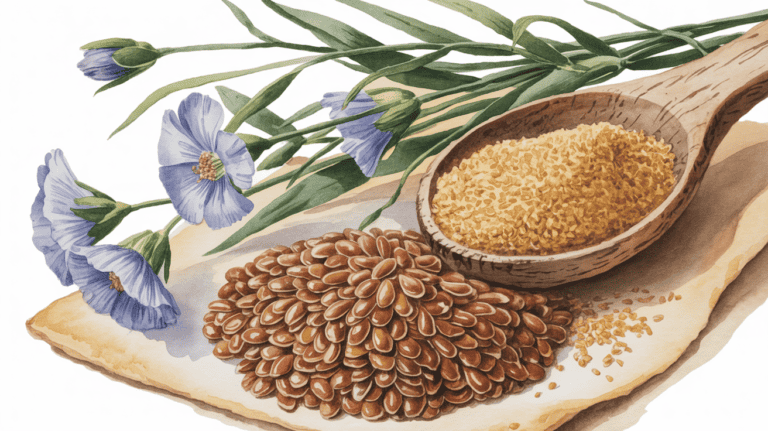
Nuts and seeds — particularly walnuts (omega-3s), pumpkin seeds (magnesium, zinc), and ground flaxseed (lignans, fiber, omega-3s) — provide multiple mood-supporting nutrients in one snack. I recommend ground flaxseed in particular for women in midlife — it does triple duty for gut health, hormone balance, and inflammation.
Turmeric contains curcumin, which has been studied specifically for depressive symptoms. The evidence is promising, though curcumin is poorly absorbed on its own. Pairing it with black pepper (which contains piperine) significantly increases absorption.
What to Reduce — Without Obsessing
The flip side matters too — but I want to frame it gently. This isn’t about perfection or elimination.
Ultra-processed foods, excess added sugar, and refined carbohydrates are consistently associated with higher levels of inflammation and increased risk of depression in large observational studies. The 2025 Dietary Inflammatory Index research confirms that the more pro-inflammatory your overall dietary pattern, the more likely you are to experience mood disturbances.
The goal isn’t to never eat sugar again. It’s to shift the overall balance of your diet toward more anti-inflammatory foods and fewer pro-inflammatory ones. Small, sustainable changes — like the ones I outline in 5 anti-inflammatory swaps for women over 40 — add up to meaningful differences over time.
A Realistic Starting Point
If this all feels like a lot, here’s where I’d actually start with a client:
Week 1: Add one fermented food daily and switch your cooking oil to extra virgin
Week 2: Include fatty fish twice during the week and add berries or leafy greens to one meal daily.
Week 3: Swap one ultra-processed snack for nuts, seeds, or dark chocolate with berries.
That’s it. Three weeks, three shifts. No overhaul required.
For a full week of meals built around these exact principles, my 7-day anti-inflammatory meal plan for perimenopause and menopause gives you breakfast, lunch, dinner, and snacks — all designed to reduce inflammation and support the nutrients your brain needs most.
You Deserve to Know This Option Exists
The connection between food and mood isn’t alternative medicine. It’s not a fringe theory. It’s evidence-based nutrition science that has progressed enormously in the last five years. And the most important thing about it is this: it gives you something you can do — starting today — that addresses the underlying inflammation driving many of your symptoms.
You’re not imagining that everything feels connected. Your mood, your gut, your energy, your joint pain — inflammation links them all. And food is one of the most powerful tools you have to change that trajectory.
What’s the one anti-inflammatory food you’ll add to your routine this week?
This article is for informational purposes only and is not a substitute for professional medical or mental health care. If you are experiencing significant depression or other mental health concerns, please work with a licensed healthcare provider. Dietary changes can complement but should not replace professional treatment. For guidance on these conversations, see How to Talk to Your Doctor About Anti-Inflammatory Nutrition for Menopause.
References (click to expand)
Bizzozero-Peroni, B., Martínez-Vizcaíno, V., Fernández-Rodríguez, R., et al. (2025). The impact of the Mediterranean diet on alleviating depressive symptoms in adults: A systematic review and meta-analysis of randomized controlled trials. Nutrition Reviews, 83(1), 29–39. https://doi.org/10.1093/nutrit/nuad176
Jacka, F. N., O’Neil, A., Opie, R., et al. (2017). A randomised controlled trial of dietary improvement for adults with major depression (the “SMILES” trial). BMC Medicine, 15(1), 23. https://doi.org/10.1186/s12916-017-0791-y
LaChance, L. R., & Ramsey, D. (2018). Antidepressant foods: An evidence-based nutrient profiling system for depression. World Journal of Psychiatry, 8(3), 97–104. https://doi.org/10.5498/wjp.v8.i3.97
Lassale, C., Batty, G. D., Baghdadli, A., et al. (2019). Healthy dietary indices and risk of depressive outcomes: A systematic review and meta-analysis of observational studies. Molecular Psychiatry, 24(7), 965–986. https://doi.org/10.1038/s41380-018-0237-8
Dietary Patterns and Mental Health Across the Lifespan: A Systematic Review of Randomized Clinical Trials. (2025). Psychology International, 7(4), 87. https://doi.org/10.3390/psych7040087
Sonnenburg, J. L., et al. (2021). Gut-microbiota-targeted diets modulate human immune status. Cell, 184(16), 4137–4153. https://doi.org/10.1016/j.cell.2021.06.019