Anti-Inflammatory Diet for Rheumatoid Arthritis: A Complete Guide
A Registered Dietitian’s Evidence-Based Approach to Managing RA Through Nutrition
If you’ve been diagnosed with rheumatoid arthritis, you’ve probably been told a lot about medications — and not much about food. That’s starting to change.
The research on diet and RA has grown significantly in the last few years, and the findings are worth knowing about. A 2025 cohort study and meta-analysis using data from the UK Biobank found that adherence to a Mediterranean diet is associated with reduced risk of developing RA in the first place (European Journal of Clinical Nutrition, 2025). And clinical trials are showing that anti-inflammatory dietary patterns can meaningfully improve disease activity, physical function, and quality of life in people already living with RA.
This doesn’t mean food replaces medication. For most people with RA, disease-modifying drugs are essential. But diet is a powerful complementary tool — one that addresses the underlying inflammation driving the disease, not just the symptoms.
You deserve to know about it. And you deserve a practical guide for actually doing it.
Short on Time? Do These Three Things First.
1. Increase omega-3 fatty acids — eat fatty fish (salmon, sardines, mackerel) at least twice a week, and consider a fish oil supplement (1,000–2,000 mg EPA+DHA daily).
2. Build your meals around the Mediterranean pattern — vegetables,olive oil , nuts, whole grains, legumes, and fish. This has the strongest evidence for RA specifically.
3. Reduce pro-inflammatory foods — especially added sugars, ultra-processed foods, and excess refined seed oils, which increase the inflammatory chemicals that drive RA flares.
Start with these. Then come back when you’re ready.
This post may contain affiliate links to products that align with my evidence-based nutrition approach. As an Amazon Associate I earn from qualifying purchases. Full disclosure.
Why Diet Matters in Rheumatoid Arthritis
RA is fundamentally a disease of inflammation. Your immune system mistakenly attacks the lining of your joints (the synovium), triggering a cascade of inflammatory chemicals — TNF-α, IL-6, IL-1β — that cause the pain, swelling, stiffness, and joint damage you experience.
The medications used to treat RA work by suppressing parts of this inflammatory cascade. And here’s what’s important: food also influences these same pathways. Some foods increase the production of inflammatory chemicals; others reduce them. Over time, your overall dietary pattern either adds to the inflammatory burden your body is carrying or helps lighten it.
A 2023 study found that the Dietary Inflammatory Index — a validated score of your diet’s inflammatory potential — is positively correlated with RA risk. In other words, the more pro-inflammatory your overall eating pattern, the more likely you are to develop RA, with a particularly strong association in women and people under 50 (Li et al., 2023). I explain how the DII works in my article on what the Dietary Inflammatory Index actually measures.
The Mediterranean Diet for RA: What the Clinical Trials Show
The Mediterranean diet has the strongest research evidence of any dietary pattern for RA. Here’s what the clinical trials have found:
The MEDRA Trial (2024)
A randomized controlled trial delivered a Mediterranean diet intervention via telehealth to women with RA. After 12 weeks, the Mediterranean diet group showed significantly improved physical function (p=0.006) and quality of life (p=0.037) compared to standard care (McKellar et al., 2024). This is notable because it shows that a dietary intervention delivered remotely — the same way you might implement it in real life — produces meaningful results.
The MADEIRA Trial (2023)
This trial provided a personalized Mediterranean diet to women with RA for 12 weeks and found improvements in disease activity measures and body composition (Tedeschi et al., 2023). The personalization aspect is important — it suggests that tailoring the diet to individual preferences and needs (rather than following a rigid protocol) works.
Mediterranean Diet + Exercise (2024)
A 2024 controlled trial of 210 RA patients found that combining a Mediterranean diet with an exercise program for six months improved muscle performance, reduced pain, and lowered CRP — one of the key inflammatory markers your rheumatologist monitors.
The Landmark Sköldstam Trial (2003)
The first major RCT on Mediterranean diet in RA found that a 12-week Mediterranean diet intervention decreased the Disease Activity Score (DAS28) by 0.56 points (p<0.001) and improved the Health Assessment Questionnaire by 0.15 points (p=0.020) (Sköldstam et al., 2003). While this is an older study, it established the foundation for all the trials that followed.
**The pattern across these trials:** Mediterranean diet interventions in RA consistently improve disease activity, physical function, quality of life, and inflammatory markers. The effects are modest but meaningful — and they come with zero side effects.
What Makes the Mediterranean Diet Work for RA
It’s not one ingredient. It’s the cumulative anti-inflammatory effect of the entire pattern:
Omega-3 fatty acids from fish reduce the production of pro-inflammatory prostaglandins and leukotrienes — the same molecules that cause joint swelling and pain. A 2021 meta-analysis found that anti-inflammatory diets rich in omega-3s significantly reduced pain on a visual analog scale in RA patients (Forsyth et al., 2021). For a practical guide to choosing the best fish, see my article on the best fish for inflammation.
Extra virgin
Polyphenols from vegetables, fruits, nuts, and whole grains reduce oxidative stress and modulate NF-κB — the master inflammatory pathway that’s chronically activated in RA.
Fiber from whole grains, legumes, and vegetables supports a diverse gut microbiome, which influences systemic inflammation. There’s growing evidence that gut health plays a significant role in RA — the gut-joint axis is a real and active area of research. I cover the gut-inflammation connection in my article on the gut-brain connection and microbiome.
What’s reduced or absent matters too: the Mediterranean pattern is naturally low in ultra-processed foods, added sugars, and excess omega-6 fatty acids — all of which promote the inflammatory pathways that drive RA.
Your RA Anti-Inflammatory Meal Framework
Rather than a rigid meal plan, here’s a flexible framework you can adapt to your preferences, budget, and energy levels (because RA fatigue is real, and complicated recipes aren’t always feasible):
The Daily Foundation
Cook with: Extra virgin
At every meal: Include at least 2 servings of vegetables. Color variety matters — each color represents different anti-inflammatory compounds.
Daily additions: A handful of nuts (walnuts are highest in omega-3s), 1–2 tablespoons of ground flaxseed (ground flaxseed is a powerhouse for inflammation), and some form of whole grain.
The Weekly Priorities
2–3 times per week: Fatty fish — salmon, sardines, mackerel, or herring. This is probably the single most impactful dietary change you can make for RA.
Several times per week: Legumes (lentils, chickpeas, black beans) for fiber and plant protein. Fermented foods (yogurt, kefir, kimchi, sauerkraut) for gut health — I cover the best options in my guide to fermented foods for inflammation.
Weekly: At least one meal centered on cruciferous vegetables (broccoli, cauliflower, Brussels sprouts, kale) for sulforaphane, a potent activator of your body’s antioxidant defenses.
What to Reduce
I say “reduce” rather than “eliminate” because perfection isn’t the goal — shifting the balance is.
Cut back on: Added sugars and sugary drinks, ultra-processed foods, excess red and processed meats, refined seed oils (soybean, corn, sunflower), and excess alcohol.
Be mindful of: Individual trigger foods. Some people with RA find that specific foods (gluten, dairy, nightshades) worsen their symptoms. If you suspect this, a structured elimination approach can help identify triggers — but don’t cut out entire food groups without evidence. I covered this thoughtfully in my article on anti-inflammatory diet for fibromyalgia, which shares many principles.
Supplements Worth Considering for RA
These are supplements with research support specifically in the context of rheumatoid arthritis:
Omega-3 Fish Oil
The most studied supplement for RA. Multiple clinical trials show that 2,000–3,000 mg of EPA+DHA daily can reduce joint tenderness, morning stiffness, and the need for NSAIDs. It typically takes 2–3 months to see full effects.
I recommend: Nordic Naturals Ultimate Omega or Carlson The Very Finest Fish Oil.
Vitamin D
Vitamin D deficiency is common in people with RA and is associated with higher disease activity. The VITAL trial found that 2,000 IU of vitamin D3 daily reduced the incidence of autoimmune disease (including RA) by 22% (Hahn et al., 2022). A 2024 meta-analysis specifically in RA patients found effects on some inflammatory markers, though results varied by dose (Al-Saoodi et al., 2024). See my full breakdown in my article on vitamin D and inflammation.
Curcumin
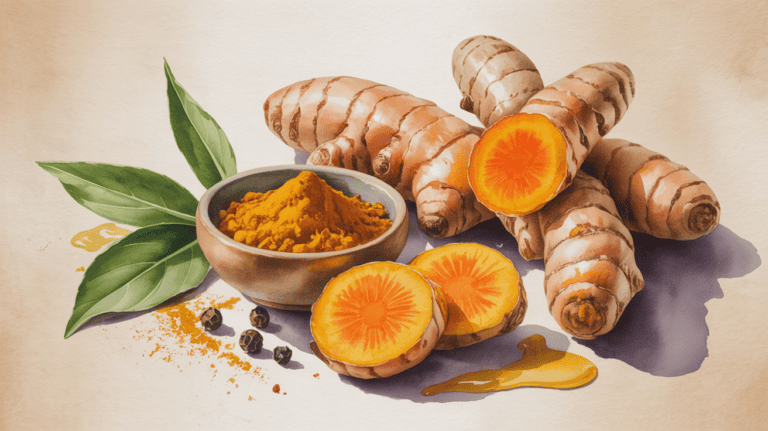
Curcumin supplements (with piperine for absorption) have been studied in RA with promising results for pain and inflammation. The typical dose is 500–1,500 mg daily. I cover dosing and product recommendations in my guide on how to use turmeric for inflammation.
Probiotics
Emerging research suggests that certain probiotic strains may modulate the immune response in RA. This is an area where the evidence is still developing, but given the gut-joint connection, supporting microbiome health is a reasonable strategy.
What a Week of Anti-Inflammatory Eating Looks Like With RA
Here’s a realistic snapshot — not a strict plan, just an illustration of how these foods fit into actual life:
Breakfast options: Greek yogurt with walnuts and berries. Scrambled eggs with turmeric and sautéed spinach. Overnight oats with ground flaxseed and cinnamon. On rough mornings — a smoothie with banana, frozen berries, collagen peptides, and almond butter.
Lunch ideas: Big salad with grilled salmon,
Dinner patterns: Baked salmon with roasted broccoli and sweet potato. Chicken thighs with turmeric rice and roasted vegetables. Black bean tacos with cabbage slaw and lime.
Snacks: Walnuts and an apple. Hummus with vegetables. A small handful of dark chocolate (70%+ cacao).
The pattern is simple: protein + colorful vegetables + healthy fat at every meal. No counting, no perfection. If you want a structured starting point, I created a 7-day anti-inflammatory meal plan that aligns with these principles and can be adapted for RA.
Working With Your Rheumatologist
Let me be direct: an anti-inflammatory diet is not a replacement for disease-modifying antirheumatic drugs (DMARDs) or biologic therapies. These medications have transformed RA outcomes, and for most people with moderate to severe RA, they’re essential.
What an anti-inflammatory diet does is work alongside your medications — potentially improving your response to treatment, reducing the inflammatory load your medications need to manage, and addressing aspects of health (gut function, energy, nutrient status) that medications don’t cover.
Some practical tips for bringing this up with your rheumatologist:
Frame it as complementary: “I’d like to use an anti-inflammatory diet alongside my current medications. The Mediterranean diet has clinical trial support for RA.”
Ask about monitoring: “Can we track my CRP and ESR over the next 3–6 months to see if dietary changes are having an effect?”
Don’t stop medications without guidance: Even if you feel better, RA medications prevent joint damage that you might not feel happening. Dose adjustments should always be made with your doctor.
I wrote a full guide on having these conversations in my article on how to talk to your doctor about anti-inflammatory nutrition.
Living with RA: The Bigger Picture
RA doesn’t just affect your joints. It affects your energy, your sleep, your mood, and your sense of who you are. And an anti-inflammatory approach addresses more of that picture than joint pain alone.
The same dietary pattern that reduces joint inflammation also supports better sleep (tart cherry juice for sleep is worth knowing about), protects cognitive function (brain fog and inflammation), supports mood (anti-inflammatory foods for mood), and helps maintain the nutrient levels that chronic inflammation depletes (common deficiencies in women over 40).
You’re not just managing a joint disease. You’re managing a systemic inflammatory condition. And the more you address that root cause — through food, movement, sleep, stress management, and appropriate medical care — the better the whole picture gets.
You’re Not Starting From Scratch
If you’re reading this, you’re already ahead. Most people with RA never hear that food can influence their disease activity. Most are never told that the same inflammation driving their joint pain is also affected by what they eat three times a day.
Now you know. And you don’t need to overhaul everything at once. Start with one change — maybe it’s adding salmon twice a week, or switching to
Small, consistent shifts in an anti-inflammatory direction compound over time. And they work alongside your medical treatment, not against it.
You’re not crazy for wanting to do more than just take pills. You’re being proactive. And that matters.
What’s the one thing you’ll try this week?
This post is for informational purposes only and is not a substitute for professional medical advice, diagnosis, or treatment. Rheumatoid arthritis requires medical management — never adjust or stop medications without your rheumatologist’s guidance. For help navigating conversations about nutrition with your medical team, see my guide on how to talk to your doctor about anti-inflammatory nutrition.